
Best IEM for Gaming & Music in 2026: The Complete Buyer’s Guide

Not sure which in-ear monitor to buy? This guide compares the current 7HZ, MoonDrop and Truthear IEMs available from Standesk and explains which model best matches your budget, games, music, microphone needs and devices.
Quick answer: which IEM should you buy?
If you want the safest first IEM, choose the MoonDrop Chu 2. It is affordable, compact and versatile enough to show why wired IEMs have become so popular.
Choose the 7HZ x Crinacle Zero 2 instead if you want a fuller, more energetic sound with extra low-end weight. For competitive FPS play, the Truthear Zero Red is the more focused step up. If you need an inline microphone, start with the Truthear Gate, consider the Truthear Zero Blue2 as the higher-tier 3.5 mm option, or choose the MoonDrop Rays for direct USB-C convenience.
At the premium end, the Truthear Nova is the strongest all-round recommendation in this group, the MoonDrop Starfield 2 is the music-first alternative, and the 7HZ Timeless II is the enthusiast planar choice.
Your priority | Best starting point | Why it fits |
First IEM for most buyers | MoonDrop Chu 2 | Affordable, compact and broadly versatile |
Fuller budget sound | 7HZ x Crinacle Zero 2 | More low-end weight and an engaging presentation |
Cheapest option with microphone | Truthear Gate | Simple all-in-one wired setup |
USB-C with microphone | MoonDrop Rays | Direct digital connection for compatible devices |
Balanced mid-range upgrade | 7HZ Sonus | Hybrid design and more refinement than entry level |
Leaner, reference-style balance | MoonDrop LAN | Controlled, clear presentation for mixed use |
Competitive FPS focus | Truthear Zero Red | Controlled bass and strong positional clarity |
3.5 mm gaming with microphone | Truthear Zero Blue2 | Communication-ready step up from Gate |
First planar IEM | 7HZ x Crinacle Salnotes Dioko | Accessible introduction to planar speed and separation |
Premium all-rounder | Truthear Nova | Refined hybrid performance for gaming and music |
Premium music-first choice | MoonDrop Starfield 2 | Natural, detailed single-driver presentation |
Premium planar choice | 7HZ Timeless II | Fast, resolving and tunable enthusiast option |
These are use-case recommendations, not a universal ranking. Fit and tuning preference can matter more than price. Browse the complete Standesk Audio collection if you want to check current availability while comparing the models below.
How we chose these recommendations
By Standesk Editorial Team | Reviewed August 2026
This guide evaluates the current 7HZ, MoonDrop and Truthear models listed by Standesk using the buying factors that most directly affect a real purchase: price position, driver design, stated tuning, connector, microphone availability, device compatibility, fit considerations and intended use. We then match those characteristics to common buyer needs such as a first IEM, competitive gaming, mixed gaming and music, USB-C convenience or a planar upgrade.
The recommendations are editorial selection guidance, not laboratory rankings. Unless a passage explicitly describes a Standesk listening test, it should not be read as a claim that every model was measured or compared under controlled conditions. Sound and comfort remain personal, and product specifications, included accessories and availability can change. Check the linked product page before ordering.
Commercial disclosure: Standesk sells the products linked in this guide. That commercial relationship does not change the selection framework: each model is recommended for a defined buyer type, and the guide also explains when a cheaper model, a different connection or no upgrade at all may be the better decision.
Why choosing an IEM is harder than it should be
Buying a first IEM often begins with a simple question and quickly becomes a research project. Search results introduce frequency-response graphs, driver counts, impedance, sensitivity, soundstage, imaging, pin types, nozzles and competing claims about the “best” tuning. One reviewer calls an IEM neutral; another hears it as bright. A model praised for music may be described as poor for gaming, while players disagree about whether extra bass helps immersion or masks footsteps.
The confusion comes from treating an IEM as if it had one quality score. It does not. An IEM is a bundle of trade-offs: shell shape, nozzle size, tip compatibility, tuning, technical performance, cable, connection and price. The right bundle depends on what you do most often.
That is why this guide does not rank twelve products from worst to best. It starts with the buying decision, then explains where each model fits. You do not need to become an audio engineer. You need to identify your priority, eliminate incompatible options and select the model whose compromises make sense for you.
What is an IEM?
An in-ear monitor, or IEM, is a compact earphone designed to seal inside the ear canal using replaceable ear tips. The name comes from professional stage monitoring, where musicians use earpieces to hear a controlled mix. Consumer IEMs now cover everything from inexpensive everyday listening to specialist audiophile and gaming models.
The practical difference between an IEM and a basic earbud is the seal. Traditional earbuds often rest near the entrance of the ear and allow more outside sound in. An IEM normally uses silicone or foam tips to create passive isolation. That seal affects comfort, bass, clarity and perceived channel balance. A poor seal can make an excellent IEM sound thin; a good seal can improve low-frequency response without changing any setting.
Most models in this guide use a wired 3.5 mm connection and do not require charging or wireless pairing. Several use detachable cables, which can make cable replacement easier. The MoonDrop Rays is the main USB-C exception, designed for users who want a direct digital connection and microphone in one package.
The seven factors that matter most
1. Fit is the first specification
An IEM cannot perform properly if it is uncomfortable or fails to seal. Ear anatomy varies, so no shell is universally comfortable. Larger bodies and wide nozzles may feel secure to one person and intrusive to another. Small shells can be easier for beginners, but even then the supplied tip size may not be ideal.
Start with medium tips, play familiar audio and gently test the seal. If bass is weak, outside noise remains obvious or the earpiece loosens, try a larger tip. If you feel pressure or soreness, try a smaller size or a different tip shape. Left and right ears do not always need the same size.
Fit also matters for gaming. A stable seal keeps directional cues consistent when you move your head, while discomfort becomes distracting during a long match. If you have small or sensitive ears, choose conservatively and treat comfort as a buying criterion, not an afterthought.
2. Tuning matters more than driver count
Tuning describes the balance between bass, midrange and treble. A warm or bass-emphasised IEM gives kick drums, explosions and electronic music more weight. A leaner, clearer balance may make voices and positional details easier to separate. A brighter presentation can sound crisp and detailed but may be tiring for treble-sensitive listeners.
Driver count does not tell you whether that balance is good. A well-tuned single dynamic driver can outperform a complicated multi-driver product, while a hybrid design can be excellent when its drivers are integrated coherently. Use driver type to understand the design, not as a shortcut for quality.
3. Gaming and music reward different compromises
For competitive shooters, the useful qualities are clean separation, precise left-right placement, intelligible midrange and enough treble information to reveal cues without becoming sharp. Excessive mid-bass can make gunfire and effects exciting but also congest busy scenes.
For music, enjoyment may matter more than extracting every cue. Many listeners prefer deeper bass, fuller vocals or a smoother top end. If you use one IEM for both, a balanced all-rounder is usually wiser than an extreme specialist.
4. A microphone changes the shortlist
Many enthusiast IEMs omit a microphone because they are designed purely for playback. That is fine if you already use a desktop USB or XLR microphone. It is inconvenient if you rely on one cable for Discord, calls or console chat.
Decide this before comparing sound. In the current Standesk range, Gate, Zero Blue2 and Rays are the straightforward microphone-equipped choices covered here. Do not assume that every cable shown with an IEM has an inline mic; verify the exact product variant before ordering.
5. Connection determines compatibility
A 3.5 mm plug is flexible. It works with many PCs, laptops, audio interfaces, handhelds and console controllers. Phones and tablets without a headphone jack require an adapter. USB-C can be more convenient for modern mobile devices and laptops, but compatibility with consoles and some USB-C ports can vary.
Choose around the device you actually use, not the connection that sounds newest. A simple 3.5 mm IEM plus a good-quality USB-C dongle is often the most adaptable setup.
6. Technical performance is useful, but not absolute
Terms such as imaging, separation, detail and soundstage describe how easily you can locate and distinguish sounds. They matter, especially in competitive games and dense recordings, but they are not measured by price alone and they do not replace tuning or fit.
An IEM with impressive detail can still be a poor choice if its treble fatigues you. A wide-feeling presentation can be less useful than accurate placement. Treat technical performance as one part of the decision rather than the only goal.
7. Budget has diminishing returns
The leap from ordinary bundled earbuds to a well-chosen entry-level IEM can be dramatic. Moving from an excellent budget model to a mid-range option usually brings refinement: cleaner layering, better accessories, more controlled tuning or a more sophisticated driver system. Premium models can improve resolution, separation and construction further, but they do not make music twice as enjoyable because they cost twice as much.
For a first purchase, buying the correct €30–€80 model is often smarter than buying an expensive IEM before you know your preferences. Upgrade when you can describe what you want to change.
IEMs versus gaming headsets
IEMs and gaming headsets solve different problems. Neither format wins automatically.
Factor | IEM | Gaming headset |
Weight and heat | Very light; little heat around the ears | Heavier; earcups can become warm |
Passive isolation | Often strong with a correct seal | Varies by open- or closed-back design |
Microphone | Frequently absent | Usually integrated |
Wireless option | Uncommon in this wired category | Widely available |
Music value | Often strong at low and mid prices | Varies; features may consume more of the budget |
Setup simplicity | Simple if playback-only; mic may be separate | Convenient all-in-one package |
Glasses | No earcup pressure on frames | Earpads can press against frames |
Ear comfort | Depends on canal fit and tips | Depends on clamp, pads and heat |
Choose an IEM if you want low weight, passive isolation, wired reliability and a compact device that also performs well for music. Choose a headset if you want wireless freedom, a boom microphone and an over-ear fit. If you already own a dedicated microphone, an IEM becomes especially attractive because you can spend the audio budget on playback quality instead of duplicate communication hardware.
The best IEMs by buyer type
Best first IEM: MoonDrop Chu 2
The MoonDrop Chu 2 is the easiest place to begin for many buyers. Its appeal is not that it dominates every category; it is that it asks for few compromises at an accessible price. The compact format suits buyers moving from ordinary earbuds, and its all-round tuning works across everyday music, videos and casual gaming.
Buy it if you want to understand the IEM experience without committing to a large budget. It is also a sensible spare pair for a laptop or travel bag. Do not buy it because you expect premium-level separation or because you need an included microphone. Its job is to provide a balanced introduction, and it does that well.
Best budget alternative for fuller sound: 7HZ x Crinacle Zero 2
The 7HZ x Crinacle Zero 2 is the better starting point for listeners who worry that a balanced budget IEM may sound too restrained. Its presentation is more energetic, with extra low-end presence that suits pop, hip-hop, EDM, action games and general entertainment.
That added body can make the Zero 2 more immediately exciting than leaner alternatives. The trade-off is that buyers focused exclusively on competitive positional cues may prefer a more controlled balance. For mixed gaming and music at a modest price, however, it is one of the strongest value choices in the group.
Best affordable IEM with a microphone: Truthear Gate
The Truthear Gate is for the buyer who wants one inexpensive cable for listening and speaking. It removes the need to add a separate desktop microphone, making it practical for Discord, study, remote calls and casual play.
Choose Gate when functionality matters more than chasing the last degree of technical performance. It is an easy entry point for a laptop or controller-based setup. If you already have a good microphone, Chu 2 or Zero 2 may give you a more targeted playback choice. If you want a more ambitious microphone-equipped 3.5 mm model, move to Zero Blue2.
Best USB-C IEM with microphone: MoonDrop Rays
The MoonDrop Rays is the convenience choice for USB-C users. It combines direct digital connection and voice communication, which can simplify a modern laptop, phone or tablet setup that lacks a 3.5 mm jack.
This is the model to shortlist when avoiding adapters is more important than maximum cross-device flexibility. Check compatibility with your specific device, especially consoles and controllers, before purchasing. A 3.5 mm model is usually easier to move between many sources, but Rays offers a cleaner solution when USB-C is your primary interface.
Best mid-range hybrid upgrade: 7HZ Sonus
The 7HZ Sonus sits in the useful space between inexpensive starters and premium products. Its hybrid driver design combines a dynamic driver with a balanced armature, aiming to provide low-frequency body together with clearer upper-frequency detail.
Sonus makes sense when you already know you enjoy IEMs and want more layering and refinement without jumping into triple-digit premium territory. It is suited to mixed music, gaming and desktop use, particularly if you use a separate microphone. It is not the cheapest path to good sound, but it is a logical “one step up” purchase.
Best controlled all-round alternative: MoonDrop LAN
The MoonDrop LAN is for listeners who prefer control and clarity over an overtly bass-forward presentation. It works well as a bridge between entry level and more expensive music-focused models, and its balanced character suits vocals, acoustic music, general media and games where a cleaner midrange is helpful.
Choose LAN over Zero 2 when you want less low-end emphasis. Choose Sonus when you want a hybrid design and a fuller mid-range upgrade experience. As always, “neutral” does not mean objectively better; it means the tonal balance is less likely to spotlight bass.
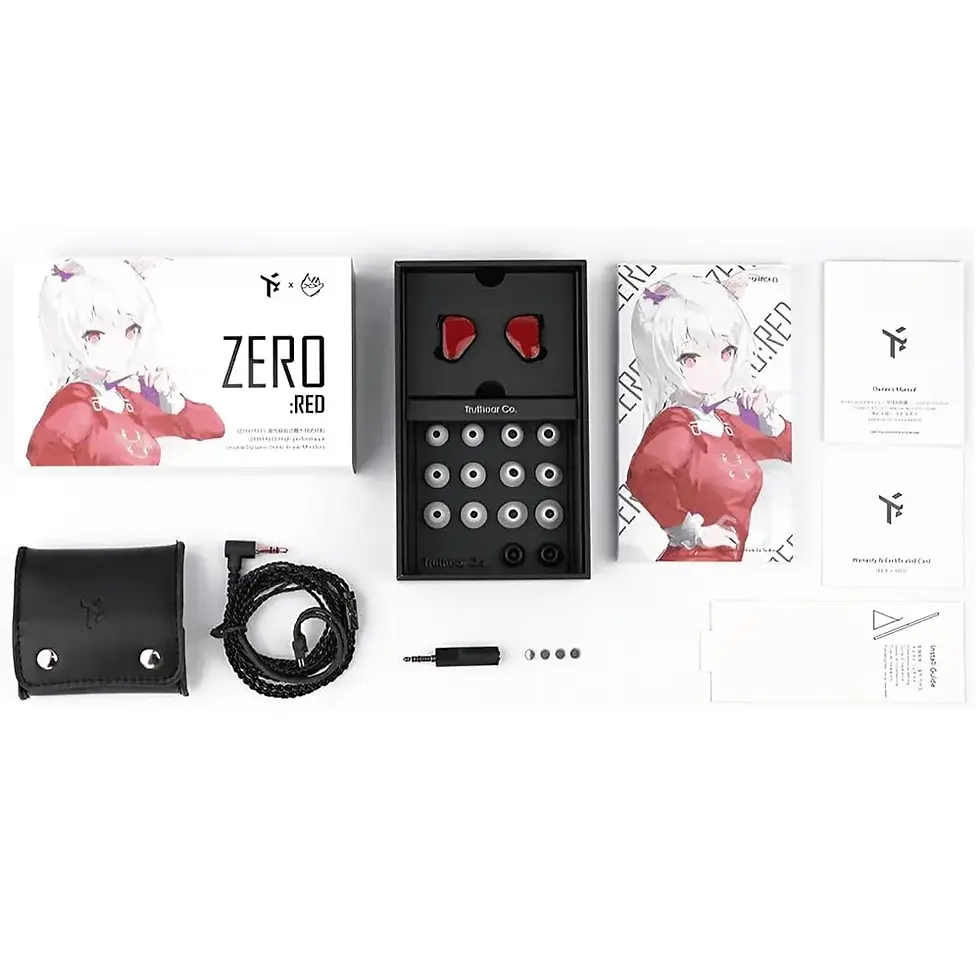
Best for competitive FPS: Truthear Zero Red
The Truthear Zero Red is the focused recommendation for players who care about clear layering and positional information. Its controlled presentation helps keep low-frequency effects from dominating the midrange during busy scenes. That makes it a sensible choice for Counter-Strike 2, Valorant, Apex Legends and other games where identifying direction and distance matters.
Zero Red is not a magic competitive advantage. Game audio engines, individual hearing, fit and practice still matter. It is simply a better-aligned tool than a heavily boosted, cinematic tuning. Buyers should also consider shell and nozzle size: a strong technical recommendation is irrelevant if the fit is uncomfortable.
Best 3.5 mm gaming option with microphone: Truthear Zero Blue2
The Truthear Zero Blue2 targets players who want a more capable IEM without giving up inline communication. It is the natural step above Gate for a 3.5 mm gaming setup, offering a more performance-oriented package while keeping the microphone requirement covered.
Choose Blue2 if you plug into a PC, laptop or controller and do not want a desktop mic. Choose Zero Red if playback and competitive clarity are the priority and you already have another microphone. The distinction is practical: Blue2 is the integrated solution; Red is the playback-focused solution.
Best first planar IEM: 7HZ x Crinacle Salnotes Dioko
The 7HZ x Crinacle Salnotes Dioko is an accessible introduction to planar magnetic IEMs. Planar drivers are known for fast transient response and clean separation, qualities that can make dense music and overlapping game effects easier to untangle.
Dioko is best for a curious buyer who already understands basic tuning preferences and wants to hear a different driver presentation. It is less suitable as a blind first purchase because its physical design and tonal character are more specialised than the safest budget options. Planar does not mean automatically superior; it is a different route to performance.
Best premium all-rounder: Truthear Nova
The Truthear Nova is the premium recommendation for someone who wants one refined IEM for gaming and music rather than a narrow specialist. Its hybrid configuration is designed to handle bass, mids and treble with greater separation than simpler entry-level designs, and it suits listeners who move between competitive games, single-player titles and varied playlists.
Buy Nova when you already know you value a balanced, detailed presentation and want a meaningful upgrade in refinement. Do not buy it merely because it costs more. If you cannot describe what your current IEM lacks, an affordable model may provide better value.
Best premium music-first choice: MoonDrop Starfield 2
The MoonDrop Starfield 2 is the premium alternative for listeners whose priority is musical coherence. A well-executed single dynamic driver can produce a natural, unified presentation without the crossover challenges of a multi-driver system, which is part of this model’s appeal.
Starfield 2 is suitable for vocals, acoustic material, rock, pop and listeners who want their IEM to feel musical before it feels analytical. It can still work well for games, but Nova or a gaming-focused model may be more logical when competitive performance is the central requirement.
Best premium planar: 7HZ Timeless II
The 7HZ Timeless II is the enthusiast option. Standesk lists an upgraded 14.5 mm planar magnetic driver, interchangeable tuning nozzles, a detachable 0.78 mm two-pin cable and a 3.5 mm connection. The combination is aimed at listeners seeking speed, separation and detail across both complex music and competitive games.
Timeless II makes sense when you know you enjoy planar characteristics, want adjustable tuning and are ready to pay for refinement. It is easy enough to drive for typical portable sources according to its product specifications, although a clean dongle or interface can still be useful when your device has no headphone jack or produces audible noise. It does not include a microphone.
Direct comparisons buyers actually make
7HZ Zero 2 vs MoonDrop Chu 2
Choose Zero 2 if… | Choose Chu 2 if… |
You want fuller bass and a more energetic first impression | You want a compact, balanced first IEM |
You listen to EDM, hip-hop or bass-led pop | You listen across many genres and want a safer baseline |
Casual and immersive gaming matter more than strict neutrality | General use and value are the priority |
Verdict: Chu 2 is the safer default for an undecided beginner. Zero 2 is the better choice when you already know you enjoy extra low-end weight. Neither is categorically better; they answer different preferences.
7HZ Sonus vs MoonDrop LAN
Choose Sonus if… | Choose LAN if… |
You want a hybrid driver design | You prefer a single-driver, controlled presentation |
You are upgrading and want extra layering | You value tonal simplicity and clear mids |
You want a fuller all-round experience | You want a leaner balance for mixed media and gaming |
Verdict: Sonus is the more obvious upgrade for a buyer seeking technical ambition. LAN is the more conservative choice for someone who dislikes exaggerated bass and values a coherent, balanced sound.
Truthear Zero Red vs Truthear Zero Blue2
Choose Zero Red if… | Choose Zero Blue2 if… |
You already own a separate microphone | You need inline voice communication |
Competitive playback quality is the priority | One-cable gaming convenience is the priority |
You want a controlled, precision-focused recommendation | You want a communication-ready gaming package |
Verdict: Red is the purist playback choice; Blue2 is the practical gaming choice. Start with the microphone question and the decision becomes much easier.
Truthear Nova vs MoonDrop Starfield 2
Choose Nova if… | Choose Starfield 2 if… |
You want a premium hybrid all-rounder | Music listening is the first priority |
Gaming and technical separation matter equally | You favour single-driver coherence |
You listen to complex, layered material | You want a natural, musical presentation |
Verdict: Nova is the broader recommendation for one premium IEM across gaming and music. Starfield 2 is the more characterful choice for a music-first listener who also games.
7HZ Dioko vs 7HZ Timeless II
Choose Dioko if… | Choose Timeless II if… |
You want a less expensive introduction to planar IEMs | You want a premium planar upgrade |
You are exploring planar speed and separation | You value refinement and interchangeable nozzles |
You accept a more specialist first planar purchase | You already know what you want from the format |
Verdict: Dioko is the experiment; Timeless II is the commitment. If you are new to IEMs altogether, consider starting with a dynamic-driver model before either one.
Which IEM is best for different games?
Game-specific recommendations should be treated as starting points because audio mixes, personal hearing and preferences differ. Still, the underlying priorities are predictable.
For Counter-Strike 2 and Valorant, choose controlled bass, good separation and reliable imaging. Zero Red is the default recommendation; Nova and Timeless II are premium alternatives when you also want better music performance. For Apex Legends and Call of Duty, where effects and environmental layers can become dense, Sonus or Nova offer a versatile balance. Zero 2 is a strong budget option for players who want more impact and do not play only for positional cues.
For story-driven RPGs, racing games and cinematic action, strict competitive tuning is less important. Chu 2 works well on a budget, while Starfield 2, Nova and Timeless II make more sense when music, ambience and texture matter. If team chat is essential, let that requirement override small tuning differences and choose Gate, Blue2 or Rays.
Virtual surround should not be your first fix. Many games already output binaural or headphone-oriented spatial audio. Adding multiple spatial-processing layers can blur direction. Begin with stereo, confirm the in-game headphone setting and experiment from there.
Which IEM is best for different music?
Genre labels are imperfect, but they help translate tuning into a buying decision.
For EDM, hip-hop and bass-led pop, Zero 2 provides an affordable, energetic starting point. Nova is the premium all-round upgrade when you want deeper layering without making bass the only feature. For vocals, acoustic recordings and singer-songwriter music, Chu 2, LAN and Starfield 2 are sensible choices because a clear midrange and coherent presentation matter.
For rock and metal, avoid choosing solely by bass quantity. Dense guitars, cymbals and vocals benefit from separation without aggressive treble. Sonus and Nova are useful all-round options, while treble-sensitive listeners should be cautious about any model described as bright. For orchestral, jazz and technically dense recordings, Dioko and Timeless II can showcase planar speed and separation; Starfield 2 is the alternative when you prefer a more natural single-driver character.
Your library is more important than genre stereotypes. Use three familiar tracks: one bass-heavy, one vocal-focused and one dense arrangement. Ask what you want to hear differently, then choose the tuning that addresses that need.
Do you need a DAC or amplifier?
Most buyers do not need an expensive DAC or amplifier for the IEMs in this guide. If your device reaches a comfortable volume, has no audible hiss and provides a stable connection, begin there. Spending on a DAC before choosing the right IEM usually produces a smaller improvement than spending the same money on better fit or a more suitable model.
You may need a simple dongle DAC when your phone or laptop has no 3.5 mm output. Choose one with the connector your device supports and enough power for normal earphones; extreme output is unnecessary and can make volume control harder with sensitive IEMs. An external interface can also solve grounding noise or provide a convenient desktop volume knob.
An amplifier does not change an IEM’s basic tuning. It should provide clean power, not magical extra detail. Be cautious with high-gain outputs: sensitive IEMs can become too loud quickly. Start at minimum volume and increase gradually.
Compatibility with PC, PlayStation, Xbox, Switch and phones
On a PC or laptop, a 3.5 mm IEM can connect to a combined headset socket, a headphone output, a USB dongle or an audio interface. A playback-only cable will not create a microphone input. For a mic-equipped IEM, the computer must support a combined TRRS headset connector or use an appropriate splitter or adapter.
PlayStation and Xbox controllers commonly accept 3.5 mm headsets, making Gate or Blue2 practical when their plug standard is supported. A microphone-free IEM works for game audio but still requires another voice solution. USB-C audio support varies by console and device, so do not assume Rays will work everywhere simply because the connector fits.
Nintendo Switch and handheld PCs are generally straightforward with 3.5 mm IEMs. Smartphones without a headphone jack require a compatible dongle, while USB-C audio behaviour can differ between devices. Always verify the exact port, adapter and microphone support before buying.
Comfort, ear tips and getting the right seal
Before judging sound, spend time on fit. Insert the IEM gently, route the cable over the ear if designed that way and avoid pushing deeply. A correct seal should reduce outside noise and deliver balanced bass without pain or strong pressure.
Silicone tips are durable and easy to clean. Narrower bores may alter the perceived balance differently from wider bores, although the effect varies by IEM. Foam tips can improve isolation and adapt to irregular canals, but they wear faster and may soften the treble. Tip rolling can be useful, but it should solve comfort or seal problems rather than become an endless search for tiny changes.
If one side sounds quieter, swap tip sizes, clean the nozzle carefully and test another source. Persistent imbalance may be caused by wax, a blocked filter, cable connection or hearing differences. Never insert tools into your ear canal, and stop using an IEM if it causes pain.
Cables, connectors and microphones
Detachable cables can extend product life, but connector standards are not universal. Common IEM connectors include 0.78 mm two-pin and MMCX, and even products using the same broad standard may differ in recessed sockets or polarity. Confirm compatibility before purchasing a replacement.
An aftermarket cable rarely transforms sound in normal use. Replace a cable for comfort, length, microphone functionality, balanced termination or damage—not because a costly material promises a dramatic tuning upgrade. A secure connector and low microphonics are more valuable than exotic marketing.
Inline microphones are convenient but depend on placement and environment. Keep the mic away from clothing friction, and do not expect it to reject keyboard noise like a well-positioned directional desktop microphone. For frequent streaming or professional calls, separating playback and voice remains the better long-term setup.
Hearing safety and everyday care
The isolation of an IEM can help you listen at lower levels, but it also makes high volume feel clean and deceptively comfortable. Begin at low volume, take breaks and reduce the level if you notice ringing, muffled hearing or fatigue. Listening duration matters as much as the number on a volume slider, and different devices produce different output at the same displayed percentage.
Wipe ear tips after use and let moisture dry before storing the IEM. Remove tips periodically for a gentle clean according to the manufacturer’s instructions. Keep nozzles and filters clear, but do not push debris inward. Store the cable loosely rather than wrapping it tightly around a phone or player.
Avoid sharing used ear tips. Replace silicone tips when they become loose, torn or permanently discoloured, and replace foam tips when they stop expanding or sealing. Good hygiene protects both comfort and sound consistency.
Decision tree: choose your IEM in under a minute
Do you need an inline microphone?
Yes, and your main device uses USB-C: choose MoonDrop Rays after checking compatibility.
Yes, and you want the lowest-cost 3.5 mm option: choose Truthear Gate.
Yes, and you want a higher-tier 3.5 mm gaming option: choose Truthear Zero Blue2.
No: continue.
Is your budget at entry level?
Choose MoonDrop Chu 2 for the safest all-round start.
Choose 7HZ Zero 2 for fuller bass and more energy.
Is competitive FPS your main priority?
Choose Truthear Zero Red.
Move to Truthear Nova or 7HZ Timeless II only if you also want a premium music upgrade.
Do you want a mid-range all-round upgrade?
Choose 7HZ Sonus for hybrid layering and versatility.
Choose MoonDrop LAN for a leaner, controlled single-driver balance.
Do you specifically want planar magnetic sound?
Choose 7HZ Dioko as the lower-cost planar entry.
Choose 7HZ Timeless II as the premium planar option.
Is music your first priority at the premium level?
Choose MoonDrop Starfield 2 for a coherent music-first presentation.
Choose Truthear Nova if gaming and music matter equally.
Common buying mistakes
The first mistake is buying from a ranking without checking use case. A product can be excellent and still wrong for your ears, device or microphone needs. The second is treating “neutral” as a guarantee of enjoyment. Neutrality is a reference point, not a personality test; many listeners prefer warmth or bass.
The third mistake is assuming more drivers mean better sound. Implementation matters more than the count printed on a box. The fourth is buying an expensive DAC to repair an unsuitable IEM. Electronics cannot fix poor fit or transform a tuning you dislike.
The fifth is ignoring return conditions for in-ear products. Hygiene restrictions may apply once packaging or seals are opened. Review the retailer’s current policy before purchasing. The sixth is listening too loudly during comparisons. Louder often sounds more impressive for a few minutes, so level-match as closely as practical.
Finally, do not upgrade because online discussion makes your current IEM feel obsolete. Upgrade when you have a specific need: more comfort, a microphone, a different connection, better separation or a preferred tuning.
Final verdict
For most first-time buyers, the decision is between MoonDrop Chu 2 and 7HZ Zero 2. Choose Chu 2 for a balanced, compact introduction; choose Zero 2 for a fuller, more energetic sound. If competitive FPS performance is the reason you are shopping, move directly to Truthear Zero Red. If a microphone is essential, let that requirement simplify the choice: Gate for entry-level value, Zero Blue2 for a more ambitious 3.5 mm setup, or Rays for USB-C convenience.
At mid-range prices, Sonus is the versatile hybrid upgrade and LAN is the controlled single-driver alternative. Dioko is for buyers curious about planar technology. At the premium level, Nova is the broadest recommendation, Starfield 2 is the music-first choice and Timeless II is the high-performance planar option.
The best IEM is not the model with the longest specification sheet. It is the one that fits comfortably, connects to your devices, supports the way you communicate and makes your games and music enjoyable at a safe volume. Compare current availability in the Standesk Audio collection, then buy around your real priority rather than online hype.
Frequently asked questions
What is an IEM?
An IEM is an in-ear monitor: a compact earphone that seals in the ear canal with replaceable tips. Consumer IEMs are used for music, gaming and everyday listening as well as professional stage monitoring.
Are IEMs good for gaming?
Yes. A well-chosen IEM can provide clear positional information, strong passive isolation, low weight and reliable wired audio. The best choice depends on fit, tuning, game type and whether you need a microphone.
Are IEMs better than gaming headsets?
Not universally. IEMs are lighter and often offer strong sound value, while headsets usually provide an integrated boom microphone, wireless options and an over-ear fit. Choose the format that matches your comfort and setup.
Which IEM should a beginner buy?
MoonDrop Chu 2 is the safest all-round beginner recommendation in this guide. Choose 7HZ Zero 2 instead if you already know you want more bass and a more energetic presentation.
Which IEM is best for competitive FPS games?
Truthear Zero Red is the focused recommendation here because its controlled balance suits positional play. Truthear Nova and 7HZ Timeless II are premium alternatives for buyers who also prioritize music.
Which IEM is best for music?
It depends on preference. MoonDrop Starfield 2 is the premium music-first choice in this group, Truthear Nova is the all-round premium alternative, and Chu 2 or Zero 2 are strong affordable starting points.
What is a planar magnetic IEM?
A planar magnetic IEM uses a thin diaphragm driven across a broad surface. Planar designs are often valued for fast response and clean separation. Dioko and Timeless II are the planar options covered here.
Should I buy a planar IEM first?
Usually only if you understand the trade-offs and specifically want that presentation. Most beginners are better served by an affordable dynamic-driver IEM before exploring Dioko or Timeless II.
Do I need a DAC for an IEM?
Usually not. Use your device’s clean headphone output if it reaches a comfortable volume without hiss. A simple dongle DAC is useful when your device lacks a 3.5 mm jack or has a noisy output.
Should I choose USB-C or 3.5 mm?
Choose 3.5 mm for broad compatibility across computers, controllers and audio equipment. Choose USB-C when your main device supports USB-C audio and you want a direct connection without a separate adapter.
Which IEMs in this guide have a microphone?
Truthear Gate, Truthear Zero Blue2 and MoonDrop Rays are the microphone-equipped choices highlighted here. Confirm the exact variant and device compatibility before ordering.
Is 7HZ Zero 2 better than MoonDrop Chu 2?
Zero 2 is better for buyers who want fuller bass and energy. Chu 2 is the safer all-round start for buyers who want a balanced, compact budget IEM. The better option depends on preference.
Is Truthear Zero Red good for gaming?
Yes. Its controlled presentation makes it a strong choice for competitive gaming and positional cues. It does not replace skill, and shell fit should be considered before purchase.
Is Truthear Nova worth the upgrade?
Nova is worth considering when you want greater refinement and separation for both gaming and music. If you are satisfied with an entry-level IEM and cannot name a limitation, upgrading is less urgent.
Can I use an IEM with a PC?
Yes. Connect a 3.5 mm IEM to a compatible headphone or headset jack, audio interface or USB dongle. A microphone-equipped cable may need a combined TRRS socket or splitter.
Can I use an IEM with PlayStation or Xbox?
Many 3.5 mm IEMs can connect to compatible controller headset sockets. Voice chat requires a microphone and the correct plug standard. USB-C support varies, so verify compatibility for your exact console and device.
Can I replace an IEM cable?
Often, but only when the IEM uses a detachable cable. Match the exact connector type, socket design and termination before buying a replacement.
How do I choose ear tips?
Choose the smallest tip that seals securely without pain. Try different sizes in each ear, listen for balanced bass and isolation, and stop if you feel pressure or soreness.
How long do IEMs last?
With careful storage, cleaning and replaceable cables, a good IEM can last for years. Moisture, clogged filters, damaged connectors and tightly wound cables are common causes of failure.
Are wired IEMs still worth buying in 2026?
Yes. Wired IEMs remain attractive because they need no charging, have negligible connection latency and often provide excellent sound value. Wireless headsets remain better when mobility is the main priority.

















Comments