
Tips for planning an ergonomic office space 🏙️
Updated: Dec 22, 2025

Planning a new office or relocating to fresh premises is always exciting — until someone realizes that someone has to plan the layout, order the furniture, and make sure the team can actually work comfortably there.
A well-planned ergonomic office space doesn’t just look nice. It reduces stress, prevents injuries, supports productivity, and helps your team feel good at work. This guide will walk you through the key steps to planning an ergonomic office from the first idea to move-in day.
⸻
Why Ergonomics Must Be Part of Your Office Plan
Many companies focus first on location, square meters and rent, leaving the actual layout and furniture decisions to the very end. As a result, they face last-minute stress, poor furniture choices, and a space that looks good on paper but feels uncomfortable in real life.
An ergonomic office plan puts people at the center. It considers:
how your team works day to day
what kind of workstations, meeting zones, and quiet areas they need
how to reduce physical strain, noise, and visual clutter
how to keep the space flexible for future growth
When you plan with ergonomics in mind from the beginning, you avoid expensive mistakes and create a workspace people actually enjoy.
⸻
Define the Scope: Who Is “the Person in Charge”?
Before anything else, clearly decide who is responsible for the project. This could be:
an office administrator or operations manager
an HR or workplace experience specialist
a project manager for the relocation
Give this person (or small team) clear authority to collect information, communicate with suppliers, and make decisions within an agreed budget. Without a defined “person in charge”, projects quickly become chaotic.
⸻
Step 1: Understand How Your Team Works
To plan an ergonomic office, you first need to understand how people actually work.
Ask these questions:
How many people work on site now, and how many in 1–3 years?
How many hours per day do most employees spend at a desk?
Do they need quiet focus zones, collaboration areas, or both?
How often are meeting rooms used and by how many people?
Are there teams that need special setups (designers, developers, call center, etc.)?
Collecting this information will help you decide on the right mix of individual workstations, hot desks, meeting rooms, phone booths, and social areas.
⸻
Step 2: Measure and Map Your Space
Even the best ideas fail if they don’t fit physically.
Request accurate floor plans from your landlord or architect.
Measure critical elements: columns, windows, doors, radiators, sockets, ceiling height.
Identify “fixed” zones (kitchen, toilets, emergency exits) and “flexible” zones.
Mark natural light sources and potential problem areas (dark corners, noisy corridors).
Create a simple layout sketch or ask a professional designer to help translate your requirements into a preliminary plan.
⸻
Step 3: Apply Ergonomic Basics to Your Layout
When shaping the layout, keep these ergonomic principles in mind.
Posture and Reach
Desks should allow a neutral sitting or standing posture with relaxed shoulders.
Frequently used items (keyboard, mouse, notebook, phone) should be within comfortable reach.
Movement and Circulation
Leave enough space between desks and furniture so people can pass without bumping into each other.
Plan clear routes to exits, meeting rooms, and shared equipment (printers, coffee machines).
Zoning
Place focus workstations away from noisy kitchens or meeting zones.
Use acoustic panels, shelves, plants, and partitions to separate quiet and collaborative areas.
⸻
Step 4: Choose Ergonomic Furniture and Equipment
This is where ergonomic planning becomes visible.
Desks
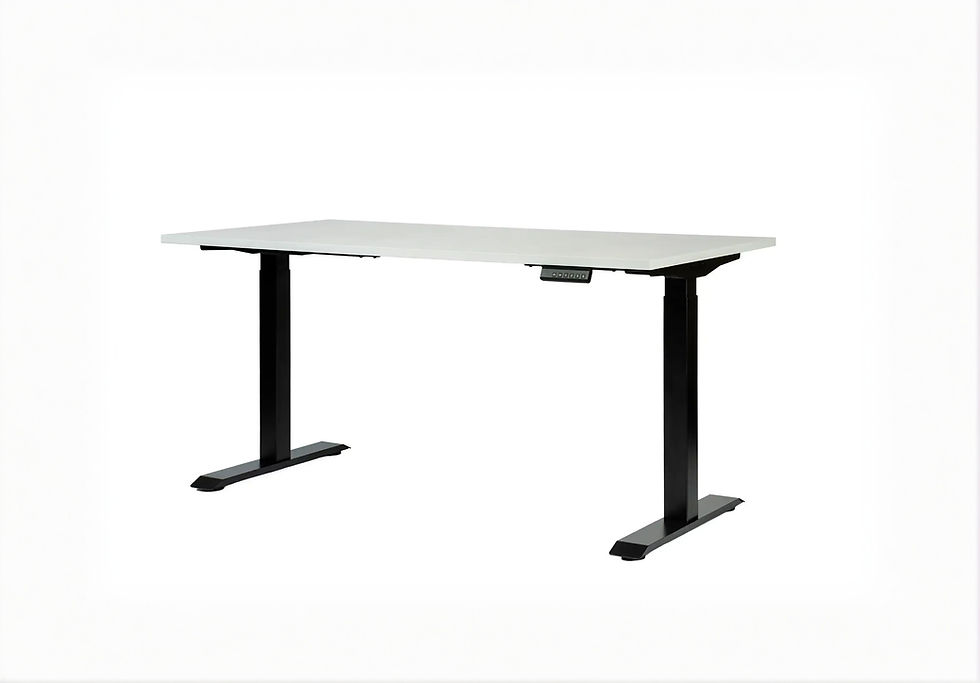
Choose height-adjustable desks or at least a mix of seated and sit-stand workstations.
Ensure enough depth for monitors, keyboards, and space to rest forearms.
Chairs
Invest in adjustable ergonomic office chairs with lumbar support, seat height adjustment, and armrests.
Test several models and choose those that fit most body types in your team. For a structured overview of chair types, key adjustments, and how to choose correctly, see our office chair buying guide.
Test several models and choose those that fit most body types in your team.
Monitors and Arms
Plan for monitor arms or stands so screens can be placed at eye level.
Dual-monitor setups are helpful for many roles and reduce constant neck rotation.
Accessories
Include keyboard trays, wrist supports, footrests, and cable management solutions where needed.
Don’t forget storage: mobile drawers, shelves, and lockers help keep desks clutter-free.
If you already know your suppliers, share the layout and ask them to propose specific product combinations that support your ergonomic goals.
⸻
Step 5: Think About Light, Acoustics and Air
Comfort in the office isn’t only about desks and chairs.
Lighting
Maximize natural light but avoid direct glare on screens.
Combine overhead lighting with task lamps at desks.
Use neutral or warm light temperatures in focus and meeting areas.
Acoustics
Open-plan offices need acoustic panels, ceiling baffles or partitions to reduce echo.
Soft materials such as carpets, curtains, and upholstered furniture help absorb noise.
Climate and Air Quality
Make sure ventilation and heating are consistent across the office.
Avoid placing workstations directly under strong air conditioning units.
These elements have a huge impact on fatigue, headaches, and overall concentration.
⸻
Step 6: Plan the Move and Delivery Timeline
An ergonomic office project isn’t only about design — timing is critical.
Confirm the move-in date and any building restrictions (delivery hours, elevator use).
Ask furniture suppliers for realistic production and delivery times.
Plan installation to happen before employees arrive, including cable management and testing of power/network points.
Keep 1–2 weeks of buffer in case of delays from construction or suppliers.
A clear timeline reduces stress for everyone and prevents “working from boxes” during the first weeks in the new office.
⸻
Step 7: Work With the Right Partners
You don’t have to do everything alone. Depending on your budget and complexity, consider:
interior designers or workplace consultants for layout and zoning
furniture specialists who understand ergonomics and sit-stand solutions
relocation companies that handle packing, transport, and basic setup
Always compare at least two or three offers. Don’t choose the first company you speak to only because you’re in a hurry — the cheapest option is not always the best one, and a small saving can cost you more in employee discomfort later.
If you need support with ergonomic furniture, height-adjustable desks, or accessories for your new office, you can always explore the solutions available at Standesk.eu.
⸻
Step 8: Test, Adjust and Collect Feedback
Even with perfect planning, the office may need small adjustments after people move in.
Walk through the office during the first weeks and observe how people use the space.
Ask employees if they feel any discomfort: glare, drafts, noise, or lack of storage.
Adjust monitor heights, desk positions, and seating arrangements where necessary.
An ergonomic office is not a one-time project but an ongoing process of improvement.
⸻
Conclusion: Turn Your New Office into a Healthy Workplace
Every office relocation or redesign is a challenge, but it’s also a great opportunity. Instead of simply fitting desks into a room, you can create a workspace that:
supports healthy posture and movement
reduces noise and visual stress
improves productivity and focus
reflects your company culture and values
With clear responsibility, a realistic timeline, and a focus on ergonomics at every stage, planning your new office becomes much easier. And if you need help choosing ergonomic furniture, sit-stand desks, or accessories for your project, Standesk.eu is ready to support you.
⸻
FAQ – Planning an Ergonomic Office Space
When should I start planning the ergonomic layout of a new office?
Ideally, start as soon as you sign the lease or decide to relocate. Early planning gives you time to design the layout, compare suppliers, and order furniture without last-minute stress.
⸻
How much budget should I allocate for ergonomic furniture?
There is no single number, but it’s better to invest more in desks and chairs than in decorative items. Ergonomic furniture directly impacts employee health, productivity, and satisfaction, and usually pays off over time.
⸻
Do all employees need height-adjustable desks?
Not necessarily, but offering at least some sit-stand workstations is highly beneficial. You can start with key teams or shared height-adjustable desks and expand as your budget allows.
⸻
What are the most important ergonomic features in an office chair?
Look for adjustable seat height, lumbar support, backrest tilt, and armrests. The chair should allow a neutral sitting posture with feet flat on the floor and relaxed shoulders.
⸻
How can I reduce noise in an open-plan office?
Combine acoustic panels, ceiling baffles, soft flooring, and fabric elements. Create quiet zones away from kitchens and social areas, and use phone booths or small rooms for calls and video meetings.
⸻
Is it better to manage the office move myself or hire a relocation company?
For small offices you may handle the move internally, but for larger teams or complex setups, a professional relocation company saves time, reduces risk of damage, and keeps the project on schedule.
⸻
How do I know if my office layout is truly ergonomic?
Check whether employees can work without recurring pain or strain, whether there is enough space to move, and whether noise, lighting, and temperature feel comfortable. Regular feedback from your team is the best indicator.
⸻
Can I improve ergonomics in an existing office without a full redesign?
Yes. Start with small changes: adjust chair and monitor heights, add footrests or keyboard trays, improve lighting, and introduce simple acoustic solutions. Even a few targeted upgrades can significantly improve comfort.




























Comments