
Best Budget Office Chairs in 2026 — Affordable Ergonomics That Actually Work
Updated: Dec 22, 2025

Finding a comfortable office chair doesn’t have to mean spending €500–€1,000. In 2026, the budget category has improved dramatically, offering ergonomic features, breathable materials, and decent adjustability at a fraction of the price. The key is knowing what to look for — and what to avoid.
This guide breaks down how to choose a budget-friendly office chair that still supports your posture, prevents back pain, and fits your workspace without overspending.
Why “Budget” Doesn’t Have to Mean “Uncomfortable”
Affordable office chairs often get a bad reputation — but not all budget chairs are created equal. While premium models offer advanced mechanisms and long-term durability, a well-designed budget chair can still deliver:
solid lumbar support
comfortable seat padding
breathable materials
essential adjustments for daily work
You’re not paying for extras — but you can still get the fundamentals right. For most people working from home or in hybrid setups, that’s often enough.
What Is a Reasonable Budget for an Office Chair in 2026?
Price ranges vary, but this is the realistic breakdown:
Ultra-budget: under €100Good for occasional use, students, or temporary setups.
Smart budget range: €120–€220Best value. Suitable for 6–8 hours of sitting with proper ergonomics.
Upper budget: €220–€350Offers better materials, stability, and comfort.
This article focuses on the €120–€220 range, where most people get the best balance of comfort and cost.
Key Features to Look for in a Budget Office Chair
1. Adjustable Height + Basic Recline
At minimum, a good budget chair should allow you to:
adjust seat height
lean back slightly
maintain a natural sitting posture
Even simple tilt mechanisms are better than being stuck in a rigid 90° upright position all day.
2. Lumbar Support (Crucial)
Not all budget chairs have adjustable lumbar support, but:
the backrest should follow a natural S-curve
lumbar pressure should sit exactly at your lower back
the chair should prevent slouching forward
If lumbar support is weak, you can supplement with a small adjustable pillow — and still stay within a low budget.
3. Seat Cushion: Medium Firmness Works Best
The biggest issue in cheap chairs is the seat collapsing after a few months.
Look for:
medium-firm foam (not too soft)
a waterfall edge to prevent leg pressure
enough depth to support your thighs (but not so deep your knees touch the edge)
Even a budget chair can feel premium with the right seat density.
4. Armrests: Height-Adjustable Is Ideal
Many budget models still use fixed armrests — not great for ergonomics.
Best options:
height-adjustable armrests
slim armrest pads (so your arms don’t drift outward)
foldable armrests if you need to tuck the chair under a desk
If you must choose, a chair with no armrests is better than a chair with badly placed ones.
5. Mesh or Fabric? (What Works Best in Budget Models)
Mesh backrest
✔ breathable✔ supportive✔ ideal for warm environments
Fabric seat
✔ softer✔ more durable than PU leather✔ avoids cracking over time
Avoid cheap PU leather — it often flakes or cracks within a year.
6. Build Quality & Durability Indicators
Even in the budget segment, check:
maximum weight capacity
wheel and base construction
whether the chair has any warranty
reviews mentioning long-term comfort (3+ months of use)
Transparency in specs is a good sign; missing details often isn’t.
A truly ergonomic setup doesn’t stop at the chair. Screen height, panel quality, and viewing distance play a major role in reducing eye strain and neck tension during long workdays. If you spend hours in front of a display, pairing a good chair with a properly chosen monitor makes a noticeable difference in daily comfort.
Types of Budget Office Chairs Worth Considering in 2026
Compact Chairs for Small Home Offices
Perfect for bedrooms, studios, and shared workspaces.
Look for:
slim backrest
low or foldable armrests
minimal footprint
These chairs keep your workspace functional without dominating the room.
Budget Chairs for Long Workdays (6–8 Hours)
If you work full-time at a desk, prioritize:
firmer, supportive seat
decent recline range (100–110°)
structured lumbar pressure
stable base
Even within a limited budget, these features significantly improve daily comfort.
Mesh Office Chairs (The Best Value Segment)
Mesh is consistently the top choice in the budget category because it:
stays cool
adapts well to your back
looks modern and minimal
Make sure the mesh is tightly tensioned and doesn't sag.
Budget Chairs for Back Support
If you experience back discomfort:
choose a chair with a clearly shaped lumbar zone
avoid flat or straight backrests
check that the backrest height matches your torso length
Sometimes, the simplest design with proper shaping works better than a “feature-loaded” cheap model.
How to Choose the Right Budget Office Chair for Your Needs
1. Identify Your Daily Usage
Ask yourself:
Do I sit 2 hours a day, or 8 hours?
Do I work from home or at an office?
Do I have back or neck issues?
Your real needs determine whether a €120 chair is enough — or whether you should stretch the budget slightly.
2. Choose a Chair That Fits Your Body
Check:
seat height range
seat depth
backrest height and curve
chair width
Even an excellent budget chair becomes uncomfortable if it doesn’t fit your height or body proportions.
3. Review the Technical Specs — Not Just Photos
Important specs include:
material (mesh/fabric)
weight capacity
seat dimensions
recline mechanism
If a manufacturer hides these details, skip the model.
4. Don’t Sacrifice Ergonomics for Aesthetics
A beautiful chair with poor back support remains a poor chair.
Choose structural comfort first — aesthetics second.
Common Mistakes People Make When Buying Budget Chairs
Choosing the absolute cheapest option
Prioritizing looks over ergonomics
Ignoring chair dimensions
Buying PU leather for long-term use
Choosing a fixed backrest that forces rigid posture
Avoid these, and your chances of finding the right budget chair multiply.
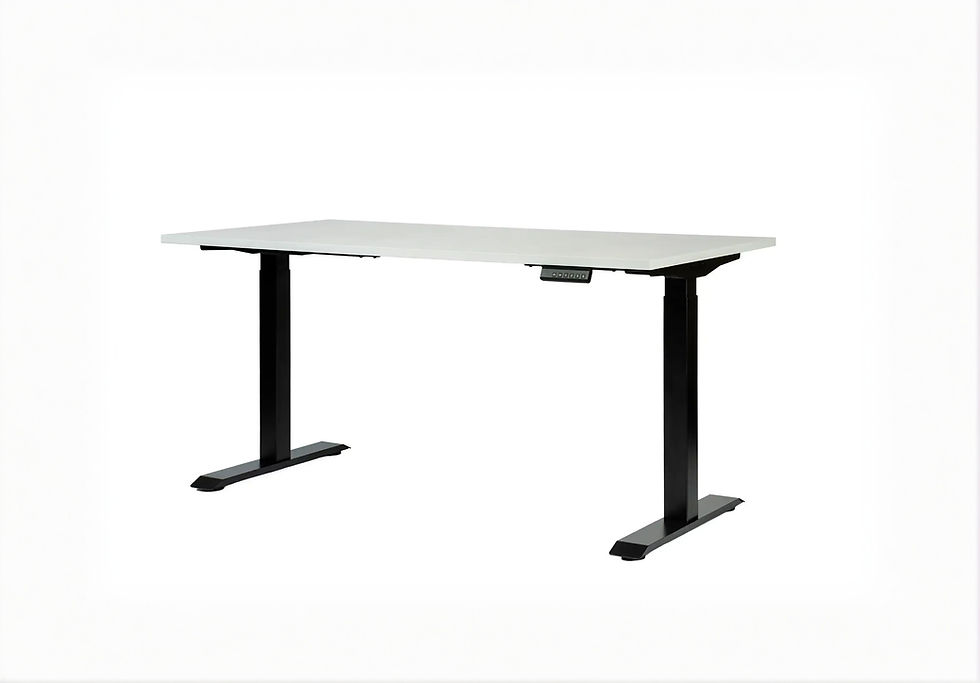
For long-term comfort, an ergonomic chair works best when paired with a height-adjustable desk that allows you to alternate between sitting and standing throughout the day. If you’re unsure which chair features truly matter for your body type, budget, and daily usage, see our full office chair buying guide for 2026.
FAQ — Budget Office Chairs in 2026
1. Can you get a comfortable office chair for under €200?
Yes. Many models between €120–€200 offer solid ergonomic design suitable for daily use.
2. What’s the biggest difference between budget and premium chairs?
Premium chairs offer better adjustability (armrests, lumbar systems, recline tuning) and higher-grade materials. Budget chairs provide the basics — but well enough for most people.
3. How long can I sit in a budget chair comfortably?
A good one should handle 4–6 hours comfortably. For 8+ hour days, look for firmer seats and better back support.
4. Is mesh better than fabric or PU leather?
Mesh is the best budget-friendly option: breathable, supportive, and durable. Fabric is also good. PU leather tends to wear out quickly at low price points.
5. Should I buy an ultra-cheap chair for a home office?
If you work from home daily — no. Ultra-cheap chairs often lose comfort fast. Aim for the €120–€200 range instead.




















Comments