
Why You Feel Tired at Your Desk by 2 PM — 9 Workspace Problems Draining Your Energy

Quick answer: why do you feel tired at your desk by 2 PM?
You usually feel tired at your desk by 2 PM because your setup keeps your body static, your screen position strains your eyes, your desk height creates shoulder tension, and your workspace makes movement harder than it should be.
The problem is not always sleep, motivation or coffee. Sometimes the desk setup itself is draining you in the background.
A standing desk can help, but only when it is part of a better setup: correct desk height, comfortable monitor position, balanced lighting, proper chair alignment, enough desk space and less clutter.
The solution is not to stand all day. The better goal is to build a workspace that lets you change position, reduce shoulder tension, keep your screen at a comfortable height and move more naturally during the day.
For many home office users and gamers, that starts with the base of the setup: the desk, frame, screen position and accessories around it.
Why the 2 PM desk slump is often a workspace problem
The afternoon slump is real for many people. You start the morning focused, answer emails, work through tasks, take a call or two, and then suddenly your body feels heavier. Your shoulders feel tight. Your eyes feel tired. Your posture collapses. You start looking for coffee, snacks or distractions.
Sometimes the reason is your schedule. But very often, your setup makes the slump worse.
A bad workspace slowly adds friction:
You sit too long without changing position
Your desk height does not match your body
Your monitor is too low, too far away or too bright
Your chair is compensating for the wrong desk height
Your lighting creates glare or harsh contrast
Your desk is cluttered and visually noisy
You have no easy way to move during work
Your work and gaming setup fight for the same space
Your desk is treated like furniture, not the base of your performance setup
None of these problems feels dramatic in the first 20 minutes. But after several hours, they add up.
That is why fixing afternoon tiredness is not only about “working harder.” It is about removing the small setup problems that drain energy before the day is over.
The 2-minute workspace fatigue check
Before buying anything, check where the fatigue starts. Most desk tiredness comes from one of five areas: posture, screen position, lighting, movement or clutter.
Quick check | What it may mean | What to fix first |
Shoulders feel raised | Desk is too high or keyboard/mouse are too far away | Desk height, chair position or adjustable frame |
You lean toward the screen | Monitor is too low, too far away or text is too small | Monitor height, distance or monitor arm |
Eyes feel tired before your body | Glare, brightness, poor screen setup or harsh contrast | Monitor position, lighting or eye-comfort monitor |
Lower back feels stiff | You sit too long without changing position | Sit-stand rhythm and movement breaks |
Desk feels mentally heavy | Clutter, cables and too many objects on the surface | Cable management and desk accessories |
Gaming feels cramped after work | Work and gaming gear compete for the same space | Larger surface, monitor arm or standing desk frame |
This quick check matters because the best upgrade depends on the real problem. If your shoulders are tense, a new monitor will not fix the desk height. If your eyes are tired, a standing desk alone will not fix glare. If your setup is cramped, the desk surface and monitor placement may matter more than the chair.
Will a standing desk help if you feel tired at your desk?
A standing desk can help if your tiredness comes from staying in one position too long, poor desk height or lack of movement during the day. It will not fix every cause of fatigue, and standing all day is not the goal.
The real benefit is position change.
A good sit-stand setup lets you move between sitting and standing without interrupting work. That can reduce stiffness, make calls more active and help you reset posture during long desk sessions.
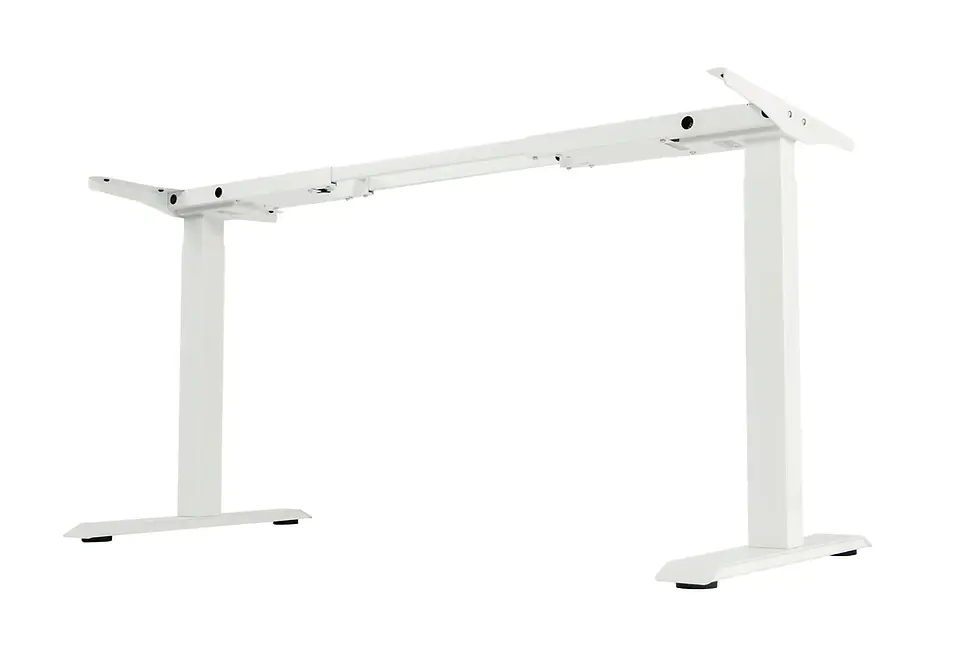
If your tabletop is already large, solid and fits your room, the problem may not be the surface. It may be the fixed base under it. In that case, a standing desk frame is often the most direct upgrade because it adds height adjustment without forcing you to replace the whole desk.
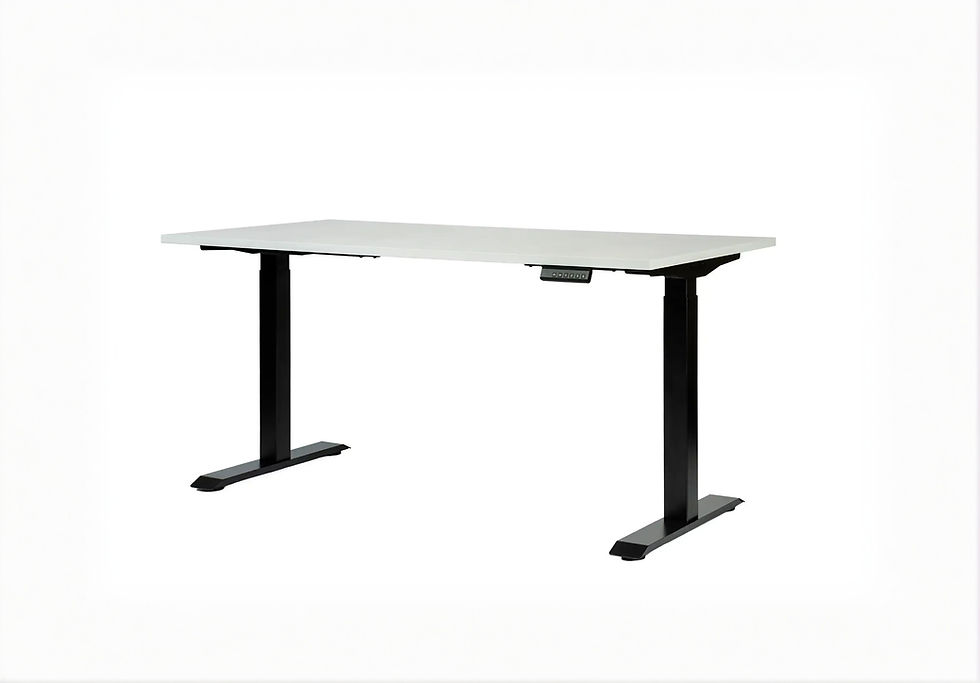
If you want a complete ready-made solution with frame and tabletop included, compare electric standing desks.
If you are unsure which route makes more sense, read our guide on standing desk frame vs standing desk.
1. You sit too long without changing position
The biggest desk problem is not always sitting itself. It is staying in one position for too long.
Your body is built to move. When you sit in the same position for hours, your hips, back, neck and shoulders start to feel locked. Even a good chair cannot fully solve that if the desk setup encourages you to stay still all day.
This is where sit-stand working helps.
The point of a standing desk is not to stand from morning until evening. That can create its own discomfort. The real benefit is being able to change position during the day without breaking your workflow.
A better rhythm looks like this:
Sit for focused work
Stand for short task blocks
Move during calls
Change position when your body starts to feel stiff
Use standing as a reset, not a punishment
For home office workers, this is especially important because the desk often becomes the place for everything: work, admin, calls, gaming, browsing and sometimes eating. If that setup does not support movement, fatigue builds faster.
If you already have a good tabletop and only need height adjustment, a standing desk frame can be a smarter upgrade than replacing the entire desk. If you want a complete ready-made solution, compare electric standing desks.
2. Your desk height forces shoulder tension
Desk height is one of the most overlooked reasons people feel tired at their workstation.
If your desk is too high, your shoulders lift slightly while typing or using the mouse. You may not notice it immediately, but after several hours your neck and upper back start doing extra work. If the desk is too low, your wrists may bend awkwardly or your posture may collapse forward.
A good desk height should let your body stay relaxed.
Use this simple check:
Shoulders relaxed
Elbows close to a 90-degree angle
Forearms roughly level with the desk
Wrists neutral
Feet stable on the floor or footrest
Mouse and keyboard close enough that you do not reach forward
If you need to shrug your shoulders, reach upward or press your forearms hard into the desk edge, the desk is not matching your body.
As a practical starting point, many people are comfortable when elbows stay close to 90 degrees, forearms are level with the desk, and wrists stay neutral. If a desk frame adjusts roughly across the 60–125 cm range, it can cover many sitting and standing setups, but the exact fit depends on your height, chair, shoes and tabletop thickness.
This matters for both work and gaming. A gamer using a mouse for long sessions can feel the same shoulder tension as someone typing all day. The exact activity is different, but the body problem is similar: the desk height forces the arms into a bad position.
A fixed-height desk can work if it happens to match your chair and body. But many people adjust the chair to compensate for the desk, then create a new problem: feet floating, hips uncomfortable or monitor height wrong.
This is where adjustable frames become useful. A standing desk frame lets you keep or choose the tabletop you want while setting the desk height around your body. For users who want a simpler all-in-one option, a standing desk can solve both frame and tabletop at once.
3. Your monitor position makes your neck and eyes work harder
If your monitor is too low, too high, too far away or too close, your body adapts without asking you.
You lean forward. You raise your chin. You look down for hours. You squint slightly. You move closer to the screen. You push your head forward without noticing.
That posture can make you feel tired even when the work itself is not physically difficult.
A better monitor position usually means:
The screen is centered in front of you
The top of the monitor is around eye level or slightly below
You do not need to lean forward to read text
The screen is not creating glare
The monitor stand does not steal too much desk space
The viewing distance feels comfortable and repeatable
Eye comfort is not only about the monitor model. It is also about screen height, brightness, glare, distance and the way the monitor fits into the desk setup.
If eye strain is one of your biggest problems, read the guide to the best monitors for eye comfort. That article goes deeper into screen features, eye comfort and what actually matters when choosing a monitor.
A monitor arm can also help because it frees desk space and lets you set the screen height and distance more precisely. This is especially useful with standing desks, because your screen position needs to work in both sitting and standing modes.
A monitor arm can also help because it frees desk space and lets you adjust screen height, depth and angle more precisely. This is especially useful with sit-stand setups, where the screen must work in both sitting and standing positions.
4. Your chair is compensating for the wrong desk
Many people blame the chair first. Sometimes the chair really is the problem. But often, the chair is trying to compensate for a desk that is the wrong height.
For example:
The desk is too high, so you raise the chair
Then your feet no longer rest properly on the floor
You start sitting forward
Your back loses support
Your shoulders still feel tense
By afternoon, everything feels uncomfortable
In this case, buying a new chair may help a little, but it does not solve the root problem. The desk height is still forcing the posture.
A good chair and good desk should work together.
The chair should support your body, but the desk should meet your arms naturally. If one of them is wrong, the other has to compensate.
Check this before blaming your chair:
Can your feet stay stable?
Are your shoulders relaxed while typing?
Are your elbows close to a natural angle?
Is your monitor still at the right height?
Are your wrists neutral?
Can you sit back without reaching forward?
If the only way to use the desk is to raise the chair too high or sit on the edge, the desk setup needs attention.
For many users, a height-adjustable desk or frame fixes the relationship between chair and tabletop better than another chair alone.
If the chair itself lacks support or adjustability, compare ergonomic office chairs, but check desk height first so the chair is not forced to compensate for the wrong surface height.
5. Your lighting makes the screen feel harsher
Lighting can quietly drain energy.
A bright monitor in a dark room creates strong contrast. A window behind the screen can cause glare. A ceiling light can reflect on the display. Weak lighting can make your eyes work harder, especially in the afternoon or evening.
You may not describe this as “bad lighting.” You may simply feel tired.
Common lighting problems:
Screen glare
Harsh contrast between monitor and room
Too much blue-white light late in the day
Dark desk area around a bright screen
Reflections from windows
Shadows over keyboard or papers
A better setup does not need to be complicated. The goal is balanced light.
Try this:
Avoid direct glare on the screen
Keep room lighting softer but not too dark
Place task lighting so it does not reflect into your eyes
Adjust screen brightness to match the room
Use indirect light if the monitor feels harsh
Avoid working in a dark room with only the screen lighting your face
This is also why the monitor, desk and lighting should be planned together. A better monitor can reduce eye strain, but a bad room setup can still make the screen uncomfortable.
If your eyes are tired every afternoon, do not only check your screen settings. Check the full visual environment around the desk.
6. Your desk is cluttered, so your brain never gets a clean working zone
A cluttered desk does not only reduce physical space. It creates visual noise.
Every extra cable, charger, box, cup, paper, controller, headset or random accessory competes for attention. Even if you are not consciously thinking about it, the workspace can feel heavier and less controlled.
This matters more when your desk is used for both work and gaming.
In the morning, you need focus. In the evening, you may want a gaming setup. If the same surface is crowded with everything at once, it becomes harder to switch modes.
A clean desk setup gives you:
More usable work space
Better mouse and keyboard position
Easier monitor placement
Less cable mess
Fewer distractions
More room for movement
A clearer mental “start work” signal
Useful upgrades may include:
Monitor arm
Cable tray
Cable clips
Desk mat
Headset stand
Laptop stand
Docking station placement
Drawer or accessory storage
Larger or better-planned desk surface
A standing desk frame or full standing desk gives the base, but desk accessories make the setup usable every day. The goal is not minimalism for aesthetics. The goal is fewer small interruptions and less friction.
Small upgrades such as cable trays, desk mats, laptop stands and other desktop accessories can make the workspace feel cleaner and easier to use every day.
7. Your workspace does not support movement breaks
Movement breaks are easy to ignore when the desk makes movement inconvenient.
If standing requires moving cables, adjusting monitors, lifting a laptop or clearing space, you will not do it often. The setup has to make movement simple.
This is where electric height adjustment is useful. With a proper sit-stand setup, you can change position without rebuilding the workstation.
The best movement rhythm is the one you will actually use.
Some people like short standing blocks. Others stand during calls. Some stand after lunch to avoid the afternoon crash. Others use height presets to switch between writing, calls and admin tasks.
Practical movement ideas:
Stand during short calls
Change position after focused work blocks
Walk for one or two minutes between tasks
Use standing after lunch as a reset
Keep your keyboard, mouse and monitor position consistent
Do not wait until your back or shoulders already feel bad
The goal is not extreme standing. The goal is regular position change.
If your current desk makes that difficult, the desk is part of the problem.
8. Your home office and gaming setup are fighting each other
Many home users do not have separate spaces for work and gaming. The same desk has to handle spreadsheets, calls, browsing, video editing, gaming, streaming, music and sometimes study.
That can create setup conflict.
A home office setup usually needs:
Comfortable typing position
Monitor height for reading
Clean cable routing
Laptop or docking station
Good lighting
Space for documents or accessories
A gaming setup may need:
Larger mousepad
Lower or different keyboard angle
More screen focus
Audio gear
Controller or headset storage
More open mouse space
Stronger cable management
Stable monitor position
If the desk is too small or badly arranged, one setup damages the other.
For example, a monitor stand may be fine for office work but block the mousepad for FPS games. A keyboard position may be fine for writing but uncomfortable for gaming. Cables may be acceptable when sitting but become messy when the desk is raised.
This is why a strong desk base and custom surface planning matter. If you are building a hybrid work/gaming setup, a frame can let you choose a tabletop size that actually fits both uses.
For FPS players, desk size and posture also affect aim consistency. We explain this more deeply in the best FPS gaming mouse setup guide.
9. You are treating the desk as furniture, not performance equipment
A desk looks simple, so it is easy to underestimate it.
But your desk decides:
How your shoulders sit
Where your monitor goes
How much mouse space you have
Whether cables stay controlled
Whether you can switch between sitting and standing
Whether your chair position works
Whether the setup feels cramped or open
Whether you can work for hours without fighting the surface
That makes the desk the foundation of the whole workspace.
A cheap or poorly matched desk can make every other product feel worse. A good monitor can still cause discomfort if it sits too low. A good chair can still feel wrong if the desk is too high. A good gaming mouse can still feel restricted if the desk does not give enough mousepad space.
This is why the best workspace upgrades start with the base layer:
Desk or frame
Chair position
Monitor height and distance
Keyboard and mouse position
Cable management
Lighting
Accessories
When the base is right, everything else becomes easier to place.
What should you fix first?
Do not upgrade randomly. Start with the symptom you feel most often.
If you feel this | First thing to check | Best upgrade path |
Heavy shoulders | Desk height | Standing desk frame or standing desk |
Tired eyes | Monitor distance, brightness and glare | Eye-comfort monitor or monitor arm |
Stiff lower back | Sitting duration and chair position | Sit-stand routine and better desk setup |
Cramped setup | Desk depth and monitor stand | Larger surface, monitor arm or frame setup |
Afternoon slump | No movement rhythm | Electric standing desk or frame |
Messy workspace | Cable clutter and accessories | Cable management and desk accessories |
Gaming feels uncomfortable after work | Work/gaming layout conflict | Larger tabletop and cleaner peripheral layout |
The best first fix is usually the one that removes the most daily friction.
If your shoulders and wrists feel tense, start with desk height. If your eyes feel tired, start with screen position and lighting. If your setup feels cramped, start with monitor placement and desk depth. If you never move during the day, start with a sit-stand setup.
Recommended Standesk setup path
If your current tabletop is good but the height is wrong, start with standing desk frames. This lets you keep or choose your own surface while adding electric height adjustment.
If you want a complete desk with frame and tabletop included, compare electric standing desks. This is the simpler route if you do not want to check tabletop compatibility.
If you are unsure whether to buy a full desk or only the frame, read the guide on standing desk frame vs standing desk. It explains which option makes more sense for home office, gaming, heavy monitors and custom setups.
If your main problem is eye fatigue, also review the best monitors for eye comfort, because screen quality and screen position both affect how tired you feel at the desk.
For the best result, think of the workspace as a system: desk height, monitor position, chair setup, lighting, cables and accessories all work together. One good product helps. A matched setup helps more.
Final advice: your desk should help you keep energy, not drain it
Feeling tired at your desk by 2 PM does not always mean you are lazy, unmotivated or sleeping badly. Sometimes your workspace is simply asking your body to work too hard in the background.
The desk is too high. The monitor is too low.The chair is compensating. The lighting is harsh.The setup is cluttered. You sit too long without changing position. Your work and gaming gear compete for the same space.
Each issue is small. Together, they drain energy.
The best fix is not to stand all day or buy every ergonomic product at once. The best fix is to remove the biggest source of friction first.
For many people, that starts with the desk base: a frame or standing desk that lets the workspace match the body instead of forcing the body to match the furniture.
If your desk is the part holding the whole setup back, start with standing desk frames or compare full standing desks to choose the upgrade that fits your space, equipment and daily routine.
FAQ
Why do I feel tired at my desk every afternoon?
You may feel tired at your desk every afternoon because your workspace keeps you in one position too long, creates shoulder or neck tension, strains your eyes, limits movement or feels cluttered. The problem is often a mix of desk height, monitor position, lighting, chair setup and lack of movement breaks.
Can a bad desk setup make you tired?
Yes. A bad desk setup can make you feel tired by creating shoulder tension, poor posture, eye strain, clutter and too little movement. The effect is usually gradual, which is why many people only notice it in the afternoon.
Why do I get sleepy at my desk but not elsewhere?
You may feel sleepy at your desk because the setup encourages stillness, poor posture, low movement and visual fatigue. The desk may also be associated with long focus blocks, screen strain or a cluttered environment.
Can sitting at a desk all day make you tired?
Yes. Sitting in the same position for long periods can make the body feel stiff and mentally drained, especially if the desk height, chair position or screen placement is not comfortable. The goal is not to avoid sitting completely, but to change position regularly.
Can a standing desk help with tiredness?
A standing desk can help if tiredness comes from staying still too long or working at a desk height that does not fit your body. The benefit comes from switching between sitting and standing, not from standing all day.
Does a standing desk help with the afternoon slump?
A standing desk can help if the afternoon slump is made worse by sitting still for too long. The benefit comes from changing position, resetting posture and adding movement during the day, not from standing for hours without breaks.
Is standing all day better than sitting?
No. Standing all day is not the goal. A better approach is to alternate between sitting, standing and short movement breaks. A good sit-stand setup makes position changes easier during the workday.
What desk height is best for energy and posture?
A good desk height lets your shoulders relax, elbows stay close to a 90-degree angle, forearms rest naturally and wrists stay neutral. If you need to shrug, reach upward or bend your wrists, the desk height is probably wrong.
Can monitor position cause fatigue?
Yes. A monitor that is too low, too high, too far away or affected by glare can make your neck and eyes work harder. Over several hours, this can contribute to tiredness, eye strain and poor posture.
Why do my shoulders feel heavy at my desk?
Heavy shoulders often come from a desk that is too high, a keyboard or mouse that is too far away, or a monitor position that makes you lean forward. Adjusting desk height and bringing input devices closer can reduce tension.
What home office setup helps with focus?
A good home office setup for focus includes a comfortable desk height, stable chair position, monitor at the right height, balanced lighting, enough desk space, cable management and a simple way to change position during the day.
Are standing desk frames good for home office fatigue?
Standing desk frames can be useful if you already have a good tabletop but need height adjustment. They let you create a sit-stand setup without replacing the entire desk, which can help reduce stiffness and improve movement during the workday.
Should I buy a standing desk or standing desk frame?
Buy a standing desk frame if you already have a strong tabletop or want a custom surface. Buy a full standing desk if you want a complete ready-matched solution with frame and tabletop included.
How often should I stand at a standing desk?
There is no perfect rule for everyone. A practical approach is to change position regularly during the day, such as standing for short work blocks, calls or after lunch. Avoid standing all day; the goal is movement and variation.
What should I upgrade first in my workspace?
Upgrade the part causing the most friction. If your shoulders feel tense, check desk height. If your eyes feel tired, check monitor position and lighting. If the setup feels cramped, check desk depth, monitor stand and cable management.






















Comments