
Best FPS Gaming Mouse Setup 2026 — Mouse, Mousepad, Skates and Desk Settings That Actually Improve Aim
Updated: May 28

Quick answer: what actually improves FPS aim?
The best FPS gaming mouse setup in 2026 is a matched system: a mouse that fits your grip, a mousepad that matches your game, skates that glide consistently, desk height that keeps your arm relaxed, and enough space for natural movement.
Specs like DPI and 8K polling can matter, but they do not fix the wrong mouse shape, a dirty pad, worn skates, bad posture or a cramped desk.
For most FPS players, the biggest improvements come from:
A mouse shape that fits your grip
A mouse weight that matches your sensitivity
A mousepad with the right balance of glide and stopping power
Smooth skates that match the pad
A desk height that keeps the shoulder relaxed
A monitor position that does not force leaning forward
A clean setup with no cable pull, clutter or restricted mouse space
A good FPS setup is not the most expensive one. It is the one you can repeat every day.
For players building a full setup, gaming mice, mousepads and PC accessories should be chosen as one system, not as random separate upgrades.
What is the best FPS gaming mouse setup in 2026?
The best FPS gaming mouse setup in 2026 depends on your game, grip style, sensitivity and desk space.
A tactical FPS player in Counter-Strike 2 or Valorant usually needs control, stopping power and stable micro-adjustments. A tracking-heavy player in Apex Legends, The Finals or Overwatch may prefer smoother glide and easier long-range tracking. A low-sensitivity player needs more mousepad space and better arm movement. A high-sensitivity player needs stable micro-control and a mouse shape that does not feel unstable in small corrections.
The best setup is not one product. It is a matched system.
A strong FPS setup usually includes:
A mouse shape that suits palm, claw or fingertip grip
A weight range that fits your sensitivity and control style
A mousepad surface matched to your game
Skates that glide smoothly without making the mouse uncontrollable
Enough desk space for your normal aiming movement
Monitor position that supports stable posture
Cable or wireless receiver placement that does not interfere with movement
That is why some players buy an expensive mouse and still aim worse than expected. The mouse may be good, but the setup around it is wrong.
Start with mouse shape before chasing specs
Mouse shape matters more than most specifications.
DPI, sensor name and polling rate are easy to advertise. Shape is what you feel every second. If the mouse is too wide, too narrow, too tall, too flat or badly matched to your grip, your aim will never feel fully natural.
The best FPS mouse for one player can feel terrible for another because grip style changes everything.
If you are not sure which grip fits you, start with choosing the right gaming mouse grip. A mouse that fits your grip will usually improve consistency more than chasing the newest sensor spec.
Palm grip players
Palm grip players usually want more hand support and a shape that feels stable. A mouse that is too flat or too small can make the hand tense. Palm grip often works better with ergonomic or fuller shapes, especially for players who value comfort during long sessions.
Best setup focus:
Stable shape
Comfortable hump position
Enough palm support
Medium or medium-light weight
Control or hybrid mousepad if overflicking is a problem
Claw grip players
Claw grip is popular in FPS because it gives both stability and fast corrections. Claw players often like mice with a defined rear hump, good side grip and enough room to control the mouse with fingertips.
Best setup focus:
Stable rear support
Good side grip
Light or medium-light weight
Hybrid mousepad for mixed tracking and flicking
Skates that are smooth but not uncontrollable
Fingertip grip players
Fingertip grip gives fast movement and small adjustments, but it can feel unstable if the mouse is too large or heavy. Fingertip players often prefer smaller, lighter mice with easy lift control.
Best setup focus:
Small or compact shape
Low weight
Clean glide
Mousepad with enough control for stopping
Desk position that keeps the wrist relaxed
If you are not sure which grip fits you, start with choosing the right gaming mouse grip. A mouse that fits your grip will usually improve consistency more than chasing the newest sensor spec.
Choose mouse weight based on sensitivity and control
Ultra-light gaming mice are popular for a reason. Less weight can make the mouse easier to start, stop and reposition. For fast FPS games, that can feel more responsive.
But lighter is not automatically better.
If a mouse is too light for your hand, sensitivity or pad, it can feel unstable. You may overflick more often, struggle to stop precisely or feel like the mouse moves before you are fully in control.
The right mouse weight depends on how you aim.
If your mouse feels too heavy only on some days, the problem may not be weight. It may be mousepad friction, arm drag or worn skates. For more detail, read the guide on mouse weight for FPS aim
Low-sensitivity arm aimers
Low-sensitivity players move the mouse more across the pad. They often benefit from lighter mice because large movements feel less tiring. But they still need enough stopping power from the pad and skates.
Best setup direction:
Light or medium-light mouse
Large XL or XXL mousepad
Control or balanced hybrid surface
Smooth skates
Enough desk space for full arm movement
High-sensitivity wrist aimers
High-sensitivity players rely more on small movements. Very light mice can feel twitchy if the shape or surface is too fast. Control and stability become more important.
Best setup direction:
Shape-first mouse choice
Medium-light or light mouse
Control or balanced mousepad
Stable grip surface
Good wrist position
Hybrid aimers
Most players are somewhere between arm and wrist aiming. They need a setup that supports both wide movement and small correction.
Best setup direction:
Medium-light mouse
Hybrid mousepad
Good desk space
Monitor position that keeps posture stable
Cable-free or cable-managed movement
If your mouse feels too heavy only on some days, the problem may not be weight. It may be mousepad friction, arm drag or worn skates. For more detail, read the guide on mouse weight for FPS aim.
Is 8K polling rate worth it for FPS gaming?
8K polling rate is one of the biggest gaming mouse marketing topics in 2026, but it should not be the first thing you choose.
Polling rate means how often the mouse reports its position to the computer. A standard gaming mouse often uses 1000Hz, while newer competitive models may support 2000Hz, 4000Hz or 8000Hz. Higher polling can make mouse movement feel smoother and reduce input delay, especially on high-refresh monitors.
But 8K polling is not magic.
It is most useful when the rest of the setup is already strong: high-refresh monitor, stable FPS, low input delay, good mouse shape, clean wireless signal and a player who can actually feel the difference.
If your mouse shape is wrong, your pad is dirty or your desk height creates shoulder tension, 8K polling will not fix the problem.
Use this simple rule:
Player situation | Polling rate priority |
Casual FPS player | Low priority |
Competitive player on 144Hz | Nice to have, not essential |
Competitive player on 240Hz or higher | More relevant |
Player with unstable PC performance | Fix FPS stability first |
Player with bad mouse shape or pad | Fix shape/pad first |
Advanced player chasing small gains | 4K/8K can make sense |
The honest answer: 8K polling is useful for some competitive players, but mouse shape, pad feel, skates and stable posture usually matter more.
If you are choosing between a mouse that fits your hand perfectly at 1000Hz and a mouse that fits badly but has 8000Hz, choose the mouse that fits your hand.
Best mousepad for FPS 2026: control, speed, hybrid or glass?
The mousepad is one of the most underrated parts of an FPS setup.
A gaming mousepad affects glide speed, stopping power, micro-adjustments, tracking smoothness and how much effort it takes to move the mouse. The same mouse can feel controlled, fast, muddy or unstable depending on the pad.
The best mousepad depends on the game, sensitivity and how you aim.
Mousepad type | Best for | Strength | Weakness |
Control pad | Valorant, CS2, tactical FPS | Strong stopping power and micro-control | Can feel slow with worn skates |
Speed pad | Apex, Overwatch, tracking-heavy games | Fast glide and low friction | Easier to overflick |
Hybrid pad | Mixed FPS players | Balanced glide and control | Not as specialized as control or speed |
Glass pad | Advanced players who want very low friction | Fast, durable and easy to clean | Can feel slippery and often needs a sleeve |
Control mousepads
Control pads are usually better for tactical FPS games where stopping power matters. They help with crosshair placement, small corrections and stable flick stops.
Best for:
Valorant
Counter-Strike 2
Tactical FPS players
Players who overflick
High-sensitivity players who need more control
Lightweight mouse users who want more stability
Possible downside:
Can feel slow with worn skates
Can feel muddy in tracking-heavy games
May feel too resistant for players who prefer speed
Speed mousepads
Speed pads reduce friction and make movement feel faster. They can help players who track a lot or feel stuck on slower pads.
Best for:
Apex Legends
Overwatch
The Finals
Tracking-heavy games
Players who feel their mouse is too slow
Some low-sensitivity players using large movements
Possible downside:
Easier to overflick
Less stopping power
Can feel unstable with ultra-light mice
Not always ideal for tactical shooters
Hybrid mousepads
Hybrid pads try to balance glide and stopping power. For many FPS players, this is the safest choice because it works across more games.
Best for:
Players who switch between FPS games
Mixed tracking and flicking
Medium sensitivity
Players unsure whether they need control or speed
Buyers who want one pad that works for most setups
Possible downside:
Not as controlled as a pure control pad
Not as fast as a pure speed pad
Still needs to match your mouse and skates
Glass mousepads
Glass mousepads are popular because they feel fast, premium and easy to clean. They can provide a very consistent surface, but they are not for everyone.
A glass pad such as the Pulsar Superglide V3 glass mousepad makes sense for players who want very low friction, easy cleaning and a surface that does not wear like cloth. It can work especially well for advanced aimers who already understand skate choice, sleeve use and stopping control.
But a glass pad is not the safest first upgrade for every FPS player. It can feel too slippery for tactical shooters, may be louder than cloth, and often works best with a gaming sleeve because bare skin can create inconsistent arm friction.
Do not buy a glass pad just because it looks premium. Buy it only if you actually want a fast surface and are ready to tune the mouse, skates and sleeve around it.
For most FPS players, a good control or hybrid pad is the safer starting point.
Do mouse skates matter for gaming?
Mouse skates are the contact point between the mouse and the pad. If they are worn, damaged or mismatched, the mouse will not feel consistent.
Many players upgrade their mouse but ignore the skates. That is a mistake.
The skates affect:
Glide speed
Start-up friction
Stopping power
Noise
Smoothness
Directional consistency
How the mouse feels on different pads
Common skate and pad problems:
Worn PTFE skates on cloth can feel scratchy or slow
Very fast skates on a speed pad can feel hard to stop
Glass skates on some cloth pads can feel inconsistent with dust or humidity
Stock feet on a premium pad may limit the pad’s real feel
Fast skates on glass can become too slippery for tactical FPS
Control pads with worn skates can feel muddy
The best skate choice depends on what problem you are solving.
If your mouse feels slow and sticky, fresh PTFE skates may help. If your mouse feels too fast, do not add even faster skates. If the pad already has very low friction, you may need more control, not more speed. If the mouse feels inconsistent across the pad, inspect the skates before blaming the sensor.
For FPS, the goal is predictable glide. Not maximum speed.
Fix arm drag and sleeve friction
Arm drag happens when your forearm sticks to the mousepad, desk or desk edge while aiming. This is common for low-sensitivity players because they use more arm movement.
Arm drag can make the mouse feel heavier than it really is. Tracking becomes less smooth, flicks feel slower and micro-adjustments require more effort.
Common signs:
Your aim feels worse after your arm warms up
Your sleeve or no-sleeve choice changes your aim
Your forearm sticks during wide movements
Tracking feels jerky even with a good mouse
Your mousepad feels different depending on humidity
A gaming sleeve can help, especially on glass pads or during long sessions. But the desk edge also matters. If the edge is sharp, it can catch the sleeve or create pressure under the forearm. A smoother desk edge and better desk height can make movement feel more natural.
This is where desk setup becomes part of aim performance.
If your arm is fighting the desk, your mouse will never feel fully consistent.
For a deeper diagnosis, read why your FPS aim feels different every day.
What desk height is best for FPS gaming?
Desk height directly affects shoulder tension, wrist angle and forearm pressure.
If the desk is too high, your shoulder rises and your arm becomes tense. If the desk is too low, your wrist may bend awkwardly or your forearm may press too hard into the edge. Both situations change how your mouse movement feels.
Use the 90-degree elbow test.
Sit in your normal gaming position. Your shoulders should stay relaxed, and your elbows should sit at roughly a 90-degree angle when your forearms reach the desk. If you need to shrug, reach upward or press your forearm hard into the desk, the setup is working against you.
For FPS players, the best desk position usually means:
Shoulders relaxed
Elbows close to a natural 90-degree angle
Forearm lightly supported
Wrist neutral
Mousepad positioned where the arm can move freely
Chair and desk height repeatable every session
This is why adjustable desks are useful for competitive setups. They help you lock in the same arm position instead of adapting your body to a fixed desk height.
A fixed-height desk can work if it happens to match your body and chair. But if you keep changing your chair height to compensate, your mouse movement will also change.
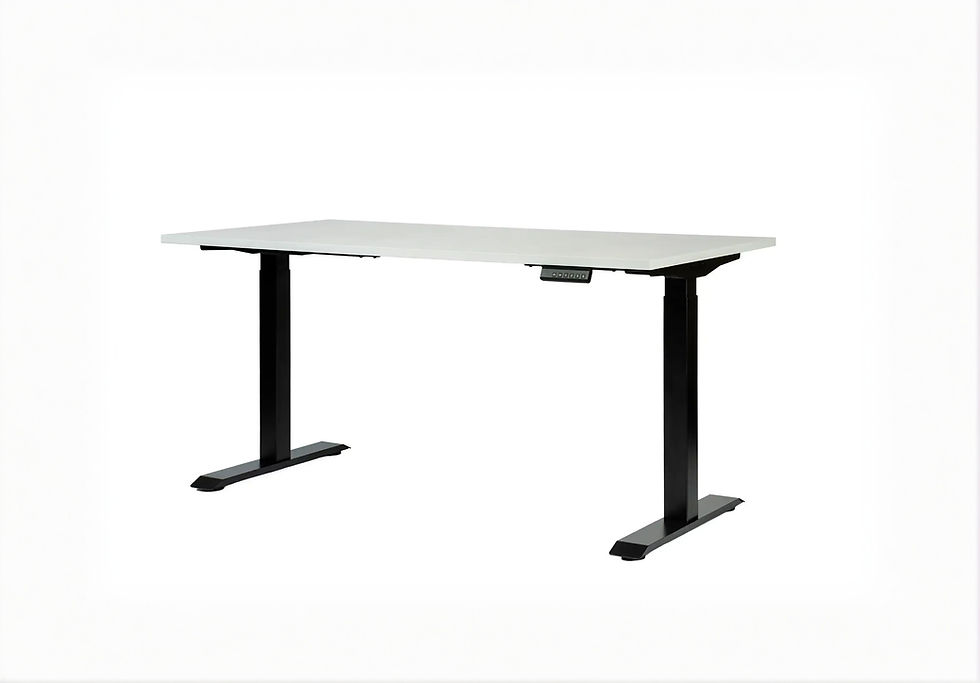
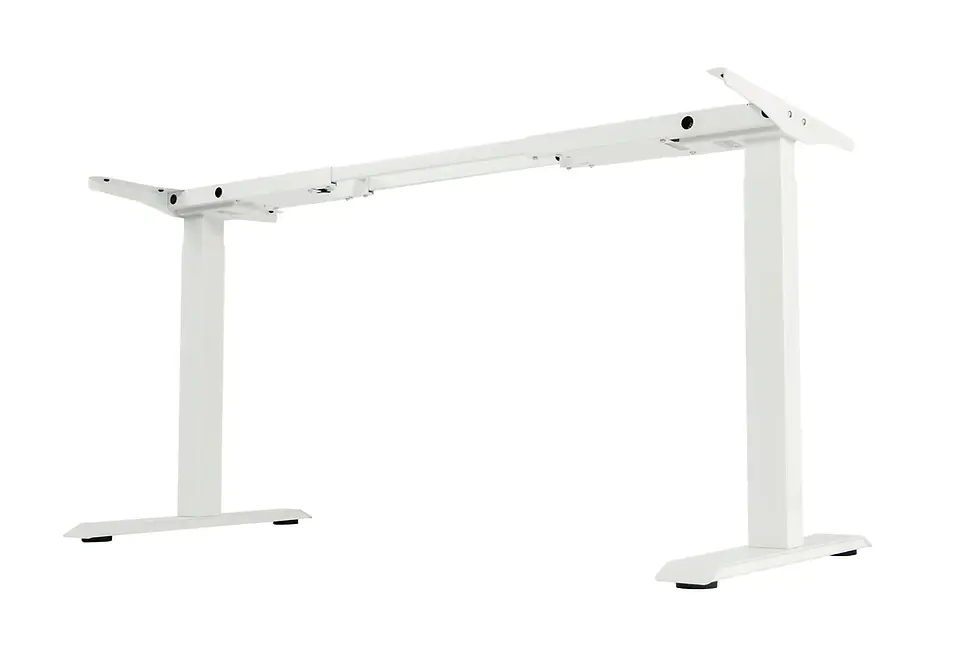
If your current desk height keeps forcing your shoulders upward or your forearm into the edge, consider an adjustable standing desk or standing desk frame that lets you set the exact height for your chair, arm position and gaming posture.
A stable aim setup starts with stable body position.
If the same desk is used for work and gaming, layout problems can also affect energy and posture. See our guide to home office and gaming setup fatigue.
What monitor position and refresh rate are best for FPS?
Monitor position affects posture, focus and desk space.
If the screen is too low, too far away or off-center, you may lean forward, raise your shoulders or twist slightly. That changes how your arm sits on the desk and how your mouse movement feels.
Refresh rate also matters because it changes how smoothly motion appears on screen. For FPS players, 144Hz is already a major improvement over 60Hz. A 240Hz monitor can feel smoother and more responsive for serious competitive play. 360Hz and higher can help advanced players, but the difference becomes smaller unless your PC can consistently deliver very high frame rates.
A simple way to think about it:
Refresh rate | Best for |
60Hz | Casual use, not ideal for competitive FPS |
144Hz | Strong baseline for FPS gaming |
240Hz | Serious competitive FPS players |
360Hz+ | Advanced players with very stable high FPS |
Higher refresh rate does not replace a good mouse setup. If your FPS is unstable, your posture is poor or your mousepad feels inconsistent, the monitor alone will not solve it. But once the basics are right, a high-refresh monitor can make tracking, flicking and reaction timing feel more connected.
A practical starting point for monitor position:
Top of the monitor around eye level or slightly below
Screen centered with your body
Distance repeatable every session
No need to lean forward to see targets clearly
Monitor stand not blocking mousepad space
A monitor arm is not only for aesthetics. For FPS players, it can help lock in focal distance, improve screen position and free up desk space. This matters because a large monitor stand can steal the exact area where your mousepad should be.
Better monitor placement can help with:
More usable mouse space
Cleaner posture
Less forward leaning
Better cable routing
More consistent screen distance
Less desk clutter
If your desk feels cramped, do not immediately buy a smaller keyboard or mousepad. Check whether the monitor stand is the real obstacle.
Fix wireless receiver and cable placement
A good mouse can still feel wrong if the cable or wireless setup interferes with movement.
For wired mice, cable drag can create uneven resistance. If the cable catches behind the desk, rubs against accessories or pulls from the wrong angle, movement will not feel clean. A mouse bungee or better cable routing can help.
For wireless mice, receiver placement matters. The dongle should not be hidden far behind the PC case or under the desk if the mouse includes an extender. A practical guideline is to keep the receiver close to the mousepad, often within about 20–30 cm of the mouse when possible.
This is not about panic over wireless latency. Modern wireless gaming mice can be excellent. The point is to remove avoidable setup issues.
Check:
Is the receiver close enough?
Is the extender placed on the desk?
Is the charging cable easy to use?
Is the mouse battery routine consistent?
Is cable clutter touching the mousepad?
Is anything limiting mouse movement?
This is where small PC accessories can improve the setup more than expected. Cable management, USB placement, mouse bungees, desk mats and clean peripheral layout all reduce interruptions.
A good setup should let the mouse disappear in your hand.
Do Hall Effect keyboards matter for FPS movement?
Mouse setup matters most for aim, but keyboard input also affects FPS consistency — especially movement, counter-strafing and timing.
This is where Hall Effect or magnetic keyboards become relevant. Unlike traditional mechanical switches, Hall Effect switches can detect key travel more precisely and often allow adjustable actuation points. In practical FPS terms, that can make movement inputs feel faster, lighter and more controllable.
This matters most in games where movement precision affects aim:
Counter-strafing in Counter-Strike 2
Jiggle peeking and deadzoning in Valorant
Fast movement corrections in Apex Legends
Strafing rhythm during tracking duels
A Hall Effect keyboard will not fix bad aim by itself. But if your mouse, pad and desk setup are already solid, a keyboard such as the Glorious PCMK 3 HE TKL Hall Effect keyboard can be part of a more responsive FPS setup because movement input becomes easier to tune.
This is especially useful for players who care about:
Adjustable actuation
Rapid movement input
Compact TKL desk space
More mouse room
Cleaner competitive setup layout
For FPS players, the keyboard should not steal mouse space. A TKL or compact layout can help keep the desk more open while still giving enough keys for competitive play.
Build by budget: starter, serious and competitive FPS setups
You do not need to buy everything at once. Build the setup based on the problem you are solving.
Starter FPS setup
Best for players upgrading from basic gear.
Focus on:
A mouse that fits your grip
A large enough cloth or hybrid mousepad
Stable desk space
Basic cable management
Comfortable chair and desk position
At this stage, do not start with niche upgrades. A good mouse and a good pad usually matter more than 8K polling, glass skates or a premium keyboard.
A good starter setup might include a lightweight wireless gaming mouse, a balanced cloth pad and enough desk space to move without hitting the keyboard or monitor stand.
Serious FPS setup
Best for players who already know their sensitivity and playstyle.
Focus on:
Mouse shape matched to grip
Weight matched to sensitivity
Control or hybrid mousepad
Clean wireless receiver placement
Fresh PTFE skates
Monitor positioned correctly
Enough desk space for arm movement
This is where specific gear choices start to matter more. A mouse such as a Lamzu Maya, Lamzu Paro, Pulsar X2, Pulsar Xlite or similar competitive wireless model can work well when it matches the player’s grip and hand size.
The key is not the brand alone. It is whether the shape, weight and surface match the player.
At this level, the mousepad and desk layout become just as important as the mouse. The goal is not just faster aim. The goal is fewer physical variables.
Competitive FPS setup
Best for players who want a tuned setup.
Focus on:
Carefully selected mouse shape and weight
Mousepad matched to game type
Skates matched to pad
Sleeve if arm drag is an issue
Adjustable desk height
Monitor arm for stable screen position
Cable-managed desk
High-refresh monitor and stable PC performance
Repeatable chair and arm position
A competitive setup can include a tuned mouse and pad combination, a glass or premium hybrid pad such as the Pulsar Superglide V3 if the player wants a fast surface, and a compact Hall Effect keyboard such as the Glorious PCMK 3 HE TKL if movement response and desk space matter.
This level is about consistency. Every part of the setup should support the same movement every session.
For this kind of build, FPS-focused gaming peripherals should be chosen together with the desk layout and accessories around them.
What should you upgrade first?
The best first upgrade depends on what feels wrong.
If the mouse hurts or feels unstable
Start with the mouse shape.
A mouse that does not fit your grip will always feel distracting. Check grip style, hand size, hump position, side shape and button comfort before blaming sensitivity.
Best first upgrade:
Gaming mouse matched to grip and hand size
If the mouse feels sticky or slow
Start with the mousepad and skates.
The issue may be friction, worn skates or pad condition, not mouse weight.
Best first upgrade:
Better mousepad
Fresh PTFE skates
Cleaner surface routine
If you overflick too often
Start with control.
The setup may be too fast for your current aim style.
Best first upgrade:
Control or balanced hybrid mousepad
Slightly more stable mouse shape
Skates with predictable stopping power
If tracking feels stuck or heavy
Start with glide.
The setup may have too much resistance.
Best first upgrade:
Hybrid or speed pad
Fresh skates
Sleeve if arm drag is the issue
Larger pad if low sensitivity
If your shoulder or wrist gets tense
Start with ergonomics.
A new mouse will not fix a desk that puts your arm in a bad position.
Best first upgrade:
Desk height adjustment
Better chair position
Monitor arm
More open mouse space
If the desk feels cramped
Start with layout.
You may not need a smaller mouse. You may need to clear the surface.
Best first upgrade:
Monitor arm
Cable management
Larger usable desk area
Better keyboard and mouse positioning
If the mouse feels delayed or unstable
Start with the wireless or cable setup.
Best first upgrade:
Receiver extender placement
Better USB position
Cable management
Stable battery routine
Lower polling rate if the PC is struggling
The most common mistake is buying a new mouse when the real issue is the pad, skates, desk height or layout.
If the mouse shape feels wrong, compare grip, weight and playstyle before buying. Our guide to the best FPS gaming mouse for your grip and playstyle explains how to choose more precisely.
Common buying mistakes in FPS setups
Buying the lightest mouse without checking shape
A light mouse with the wrong shape is still the wrong mouse. Shape decides control. Weight changes how movement feels.
Buying 8K polling before fixing the basics
High polling rate does not fix bad posture, dirty mousepads, worn skates or unstable FPS.
Buying a fast mousepad because it sounds more competitive
Fast is not always better. Tactical FPS players often need stopping power more than pure speed.
Using a small mousepad with low sensitivity
Low-sensitivity players need room. If you keep lifting the mouse or hitting the pad edge, the setup is limiting you.
Ignoring skates
Worn skates can make a good mouse and good pad feel bad.
Treating the desk as background furniture
The desk affects arm angle, shoulder tension, mouse space, monitor distance and cable routing. It is part of the setup.
Copying a pro setup without matching your own hand and desk
A pro player’s settings and gear work for their body, game, desk height and habits. Use them as reference, not as a perfect template.
This is also why premium gaming mice can still feel wrong when the pad, skates, desk height or grip fit are not matched properly.
Recommended Standesk setup path
For most players, the smartest path is:
Choose the mouse based on grip and hand comfort
Choose mouse weight based on sensitivity
Choose mousepad type based on game and control needs
Check skates and surface condition
Fix desk height and arm movement
Position the monitor properly
Clear cables and create enough mouse space
This is the complete setup view.
If you only upgrade the mouse, you may still fight the same problems. If you build the mouse, pad, desk and peripherals together, aim becomes easier to repeat.
For setup-focused upgrades, start with mousepads, gaming mice and PC accessories based on the exact problem you are trying to solve.
If your main issue is desk height, shoulder tension or limited space, the better first step may be an adjustable standing desk or standing desk frame that lets you build the gaming surface around your body, not the other way around.
How this setup connects to the rest of your FPS performance
A better setup will not replace practice. You still need good crosshair placement, game sense, recoil control and time in the game.
But a better setup removes unnecessary friction.
It helps you:
Repeat the same posture
Move the mouse without resistance
Stop flicks more predictably
Track targets more smoothly
Avoid shoulder and wrist tension
Keep mouse space clear
Trust that the mouse feels the same each session
That is the real goal of an FPS setup.
Not more RGB. Not the highest DPI. Not the most expensive mouse.
The goal is repeatability.
If your setup lets you sit the same way, move the same way and aim on a consistent surface, your practice becomes more reliable.
If your aim feels inconsistent even after practice, check the setup errors that destroy FPS consistency before assuming the problem is only skill.
Final advice: build the setup around consistency, not hype
The best FPS gaming mouse setup in 2026 is not built from isolated upgrades. It is built from parts that work together.
A great mouse with the wrong pad can feel bad. A fast pad with the wrong skates can feel unstable. An ultra-light mouse on a cramped desk can feel awkward. An 8K mouse with poor posture will not save your aim. A premium setup with bad desk height can still feel inconsistent.
Before buying the next upgrade, ask one question:
“What problem am I trying to solve?”
If the mouse shape feels wrong, start with the mouse. If glide feels inconsistent, check the pad and skates. If your arm feels tense, fix desk and chair position. If space is limited, fix the layout.If the mouse feels different every day, look for repeatability problems.
That is how you build an FPS setup that actually improves aim.
FAQ
What is the best FPS gaming mouse setup in 2026?
The best FPS gaming mouse setup includes a mouse that fits your grip, a weight that matches your sensitivity, a mousepad with the right glide and stopping power, smooth skates, enough desk space, stable monitor position and a clean cable or wireless setup. The goal is consistency, not just expensive gear.
Is a lighter mouse better for FPS?
A lighter mouse can help with faster movement and lower fatigue, especially for low-sensitivity players. But lighter is not always better. If the mouse is too light for your control style or mousepad, it can feel unstable.
Is 8K polling worth it for gaming?
8K polling can be useful for serious competitive players with high-refresh monitors and strong PCs, but it is not essential for everyone. Mouse shape, pad feel, skates and stable FPS usually matter more than polling rate alone.
Is control or speed mousepad better for FPS?
Control pads are usually better for tactical FPS games like Valorant and Counter-Strike 2 because they help with stopping power and micro-adjustments. Speed pads can work better for tracking-heavy games where smooth continuous movement matters.
Are hybrid mousepads good for FPS?
Yes. Hybrid mousepads are often a safe choice because they balance glide and control. They work well for players who switch between games or do not know whether they prefer a control or speed surface.
Are glass mousepads good for FPS?
Glass mousepads can be good for players who want very low friction and easy cleaning, but they are not for everyone. They can feel too slippery for tactical FPS, may need a sleeve and require careful skate matching.
Do mouse skates matter for FPS aim?
Yes. Mouse skates affect glide, stopping power and consistency. Worn or mismatched skates can make a good mouse feel slow, scratchy or unstable.
Do gaming sleeves help aim?
Gaming sleeves can help if your forearm sticks to the mousepad or desk. They are especially useful for low-sensitivity players, glass pad users or players who notice arm drag during long sessions.
What desk height is best for FPS gaming?
A good starting point is a desk height where your shoulders stay relaxed and your elbows sit at roughly a 90-degree angle when your forearms reach the desk. If you need to shrug or reach upward, the desk is probably too high.
Does a monitor arm help gaming performance?
A monitor arm can help indirectly by improving screen position, freeing mousepad space and making posture more repeatable. It will not improve aim by itself, but it can remove setup problems that affect consistency.
Do Hall Effect keyboards help FPS players?
Hall Effect keyboards can help FPS players who care about movement timing, counter-strafing and adjustable actuation. They do not improve aim directly, but they can make movement inputs feel faster and more controllable.
Should I upgrade my mouse or mousepad first?
If the mouse shape feels wrong, upgrade the mouse first. If the mouse feels slow, sticky, too fast or inconsistent across the surface, upgrade the mousepad or skates first.
What accessories improve FPS aim consistency?
The most useful accessories are a suitable mousepad, replacement skates, gaming sleeve, monitor arm, cable management, mouse bungee for wired mice and a desk setup that gives enough space for natural movement.

















Comments