
Best Standing Desk Height for Productivity: Ergonomic Setup Guide
Updated: Apr 1

Quick Answer: What Is the Best Standing Desk Height?
The best standing desk height allows your elbows to remain close to a 90-degree angle, with your forearms resting naturally and your shoulders relaxed.
For most adults:
Seated desk height: 70–75 cm
Standing desk height: 100–115 cm
However, the exact height depends on your body height, keyboard position, and monitor placement.
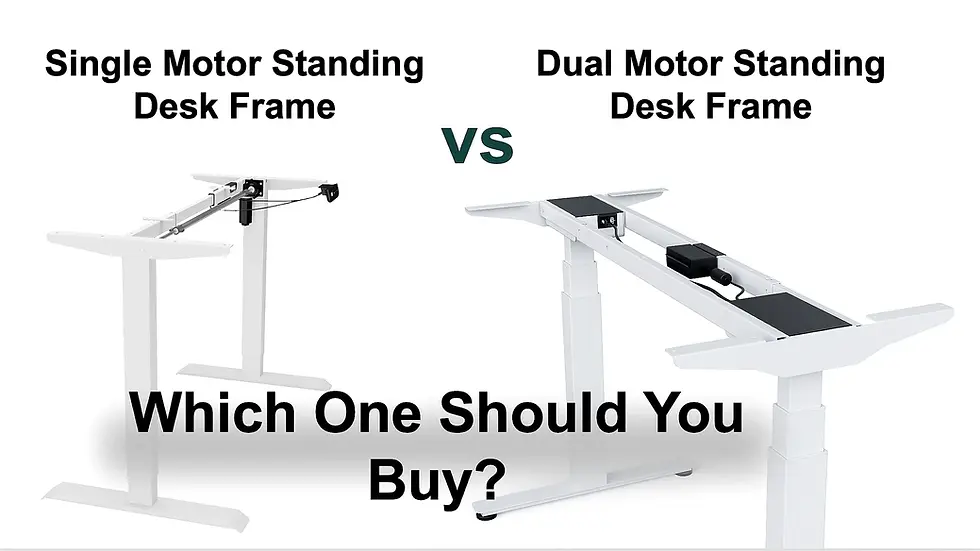
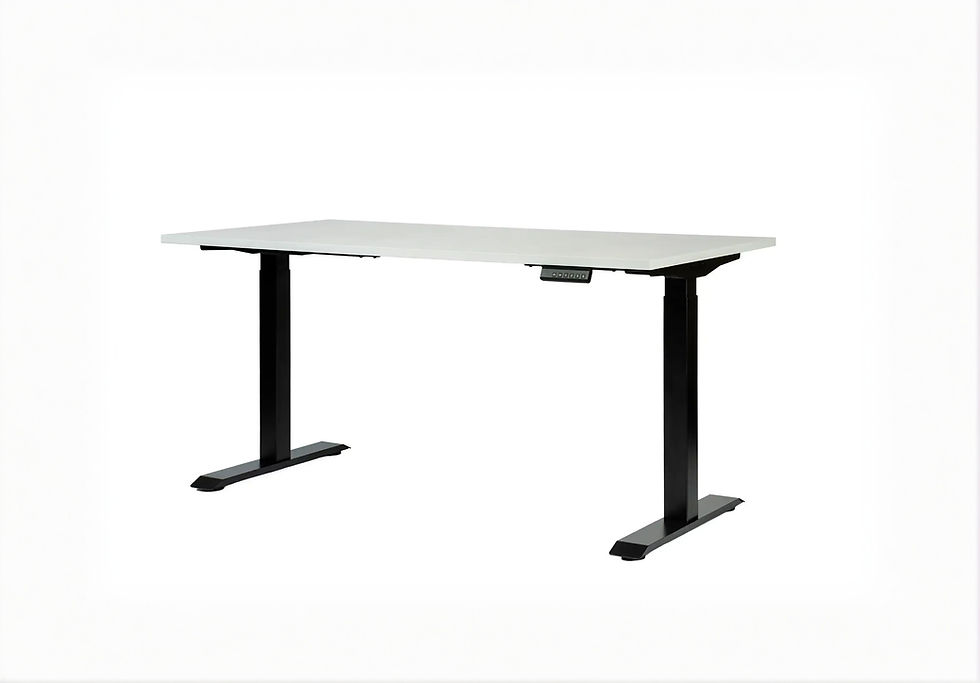
This is why many professionals prefer height-adjustable standing desks or standing desk frames, which allow precise positioning for both sitting and standing work.
A properly adjusted standing desk improves comfort, reduces fatigue, and supports longer periods of focused work.
Why Standing Desk Height Matters for Productivity
Standing desks are increasingly used across Europe because they allow workers to alternate between sitting and standing.
Research shows that prolonged sitting contributes to fatigue and musculoskeletal strain. A Cochrane systematic review on sit-stand workstations found that adjustable desks can significantly reduce sitting time during the workday.
The World Health Organization guidelines on sedentary behaviour also highlight the health risks associated with prolonged sitting and recommend regular movement throughout the workday.
These findings help explain why height-adjustable desks and standing desk frames are becoming increasingly common in modern home offices and professional workplaces.
Optimal Standing Desk Height by Body Height
The correct standing desk height depends primarily on the user's height.
User Height | Ideal Sitting Desk Height | Ideal Standing Desk Height |
160–170 cm | 67–72 cm | 95–105 cm |
170–180 cm | 70–75 cm | 100–110 cm |
180–190 cm | 72–78 cm | 105–115 cm |
190+ cm | 75–82 cm | 110–120 cm |
These values assume:
elbows remain close to 90°
wrists stay neutral while typing
monitor is positioned at eye level
Because body proportions vary, adjustable standing desk frames are usually the most reliable solution.
What Is the Correct Standing Desk Height? (Simple Calculator)
If you want to calculate your ideal standing desk height quickly, you can use a simple ergonomic rule used by many workstation specialists.
Standing Desk Height Formula
A good estimate for standing desk height is:
Your height × 0.60 (A simple ergonomic rule is to set your standing desk height to approximately 60% of your body height.)
Example calculations:
User Height | Recommended Standing Desk Height |
160 cm | ~96 cm |
170 cm | ~102 cm |
180 cm | ~108 cm |
190 cm | ~114 cm |
This formula places the keyboard close to elbow height, which is the most important factor for comfortable typing.
However, your ideal setup may vary slightly depending on:
shoe height
keyboard thickness
desk thickness
monitor placement
Because of these small variables, height-adjustable standing desks or standing desk frames allow much more precise ergonomic alignment than fixed desks.
Sitting vs Standing Desk Height
Switching between sitting and standing requires different desk heights.
Work Position | Correct Alignment |
Sitting | Desk slightly below elbow height |
Standing | Desk aligned with elbow height |
Monitor | Top of screen slightly below eye level |
A fixed desk cannot accommodate both positions properly. This is why many professionals now use electric standing desks or adjustable desk frames.
These desks allow quick height adjustments during the day, which helps maintain ergonomic posture.
Expert Insight From Real Workspaces
In many real workspaces, the biggest productivity improvement does not come from buying new equipment.
It comes from correcting desk height.
Many professionals work at desks that are 5–10 cm too high or too low, which forces them to raise their shoulders or bend their wrists while typing.
Once the desk height is corrected — or replaced with a height-adjustable standing desk frame — posture stabilizes and long work sessions become noticeably more comfortable.
This is often the moment when people realize that ergonomic alignment directly affects focus and productivity.
Signs Your Desk Height Is Incorrect
Several physical signals indicate your desk height may need adjustment:
shoulders raised while typing
wrists bent upward or downward
neck leaning forward toward the screen
pressure on the underside of the forearms
fatigue after relatively short work sessions
If two or more of these occur regularly, adjusting desk height can significantly improve comfort and concentration.
Recommended Workspace Setup for Productivity
A balanced productivity workspace typically includes:
monitor arm for correct screen positioning
ergonomic office chair with lumbar support
cable management accessories to reduce visual clutter
sufficient office lighting setup for focus and productivity
Together these elements create a workspace that supports both comfort and sustained focus.
If you want to optimize your workspace fully, see our guide on how to design a deep work environment.
When a Standing Desk Frame Makes the Most Sense
For many home offices, replacing the entire desk is unnecessary.
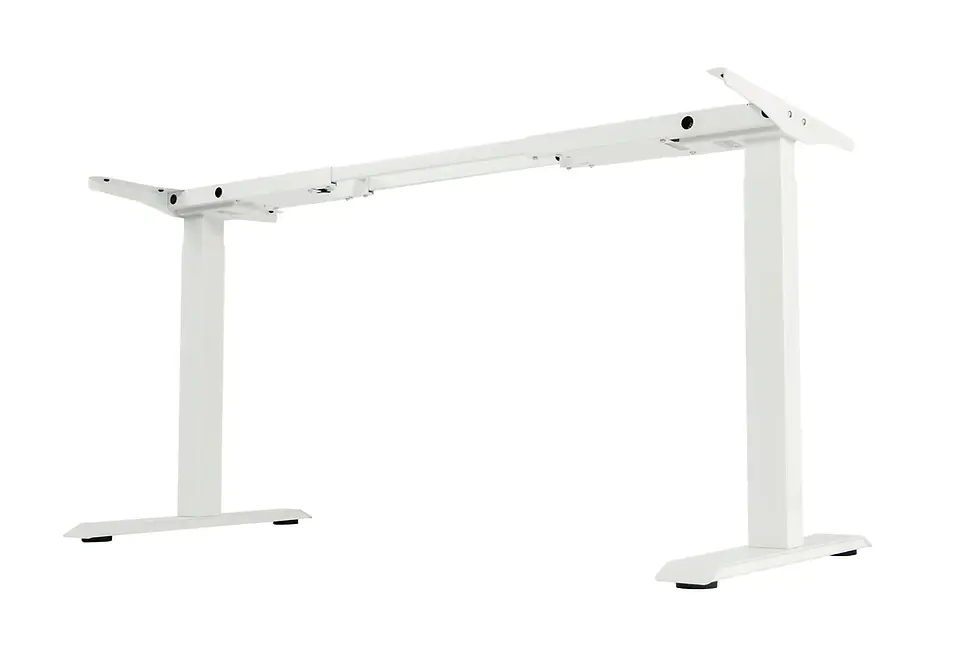
A standing desk frame allows you to keep your existing tabletop while adding sit-stand functionality.
This approach offers several advantages:
precise height adjustment
flexibility for different users
improved ergonomics
lower cost compared to replacing a full desk
This is one reason standing desk frames are becoming increasingly popular across Europe.
If you are considering upgrading your workspace, explore modern standing desk frames designed for ergonomic sit-stand work.
Common Standing Desk Height Mistakes
Even with a standing desk, several mistakes can reduce productivity:
desk adjusted too high
keyboard positioned above elbow level
monitor placed too low
standing for too long without posture variation
ignoring wrist alignment
Correct ergonomic setup is more important than standing more frequently.
If you want practical tools that improve desk ergonomics and organization, see our ergonomic desk accessories buying guide.
Final Recommendation
The best standing desk height keeps your elbows at roughly 90 degrees while your shoulders remain relaxed and your wrists neutral.
For many professionals, achieving this consistently requires a height-adjustable desk or standing desk frame that allows quick posture adjustments throughout the day.
The goal is not simply to stand more.
The goal is to create a workspace that supports stable posture, comfort, and long periods of focused work. Workspace performance depends not only on desk height but also on environmental factors such as lighting and noise — see how to improve focus in our office noise reduction guide or a practical guide post for noise reduction in your office.
FAQ: Standing Desk Height and Productivity
What is the correct standing desk height?
The desk should align with your elbows when standing, allowing your forearms to rest comfortably while typing.
Are standing desks worth it for productivity?
Standing desks can improve energy levels and reduce fatigue when used correctly, especially when alternating between sitting and standing.
How often should I switch between sitting and standing?
Most ergonomic experts recommend switching positions every 30–60 minutes.
Are standing desk frames better than fixed desks?
Standing desk frames provide adjustable height, allowing users to maintain proper ergonomics throughout the day.
What is the ideal monitor height with a standing desk?
The top of the monitor should be at or slightly below eye level to prevent neck strain.




















Comments