
Office Noise Reduction Guide: How to Improve Focus and Productivity at Work
Updated: Apr 5

Quick Answer: Does Noise Reduce Productivity?
Yes. Noise is one of the most common causes of lost focus in both offices and home workspaces.
Even moderate background noise (around 50–65 dB, typical for open offices) can:
reduce concentration
increase mental fatigue
lead to more mistakes over time
For focused work, the ideal environment is low and controlled sound — typically below 50 dB.
The key is not complete silence, but reducing unpredictable and speech-based noise.
Why Noise Reduces Focus
Your brain has limited attention capacity.
When noise is present, part of that capacity is used to filter background sound — even if you are not consciously aware of it.
This leads to:
more frequent attention shifts
slower thinking
reduced accuracy over time
faster mental fatigue
Studies from Cornell University show that noisy environments increase stress and negatively affect task performance, especially in open office settings.
In simple terms: the more noise your brain has to ignore, the less energy remains for your actual work.
Types of Office Noise That Disrupt Productivity
Speech Noise (Most Distracting)
Human conversations are the most disruptive type of noise.
Your brain is naturally wired to process speech, which makes it difficult to ignore nearby conversations.
Examples:
colleagues talking
phone calls
video meetings nearby
Intermittent Noise
Unpredictable sounds interrupt focus quickly.
Examples:
notifications
doors opening or closing
sudden movements or sounds
These create repeated attention breaks during the day.
Constant Background Noise
Steady noise is less harmful because your brain can adapt to it.
Examples:
ventilation systems
light traffic noise
white noise
In some cases, consistent background sound can help mask distractions.
Ideal Noise Levels for Focused Work
Environment | Noise Level | Real-World Example | Effect on Focus |
Ideal | 30–40 dB | Library, quiet room | Maximum concentration |
Good | 40–50 dB | Quiet office | Stable focus |
Moderate | 50–65 dB | Open office | Noticeable distraction |
High | 65+ dB | Busy café, traffic | Strong focus disruption |
Recommendation: For deep work, aim to keep your workspace below 50 dB whenever possible.
How to Reduce Office Noise (Practical Solutions)
Start With Simple Adjustments
Before investing in solutions, optimize your setup:
position your desk away from high-traffic areas
increase distance from noise sources
reduce unnecessary sound in your environment
Even small adjustments can significantly improve focus. For step-by-step actionable strategies, see how to reduce office noise.
Add Soft Materials
Soft materials absorb sound and reduce echo.
Examples:
carpets or rugs
curtains
upholstered furniture
These help create a quieter and more comfortable workspace.
Use Acoustic Panels
Acoustic panels reduce sound reflections and improve sound quality.
Best for:
home offices
meeting rooms
echo-heavy environments
They are especially useful in rooms with hard surfaces.
Use Acoustic Screens (Best for Offices)
Acoustic screens block direct sound from nearby sources.
They are one of the most effective solutions for:
open office environments
shared workspaces
desks positioned close together
Acoustic screens block direct sound paths and create focused work zones — explore available acoustic screens for office workspaces.
Use Controlled Background Sound
White noise or ambient sound can help mask sudden distractions.
This creates a more stable sound environment, which supports concentration.
Not sure if panels will solve your problem? See our detailed breakdown on do acoustic panels work before choosing your setup. Two of the most common solutions are acoustic panels and acoustic screens, but they solve different problems. If you’re deciding between them, read our full comparison of acoustic panels vs acoustic screens to understand which one fits your workspace best.
Expert Insight: Why Noise Is Often Overlooked
In many workspaces, noise is underestimated as a productivity factor.
Companies often invest in desks, chairs, and monitors — but ignore acoustic conditions.
In practice, poor noise control often leads to:
reduced focus
higher fatigue
lower work quality
Even small improvements in acoustic conditions can noticeably improve daily performance.
Example From Real Workspaces
In open office environments, employees often report that conversations and nearby activity are the main sources of distraction.
After introducing simple changes such as:
repositioning desks
adding acoustic screens
reducing echo with soft materials
many teams experience:
fewer interruptions
longer periods of concentration
more consistent productivity throughout the day
Noise, Ergonomics, and Workspace Setup Work Together
Noise is only one part of a productive workspace. To create a distraction-free setup, it’s important to consider the full environment — see our guide on how to design a deep work environment.
For best results, it should work together with:
proper desk height
correct monitor positioning
optimized lighting
If one element is misaligned, it can reduce the effectiveness of the others.
To improve your overall setup:
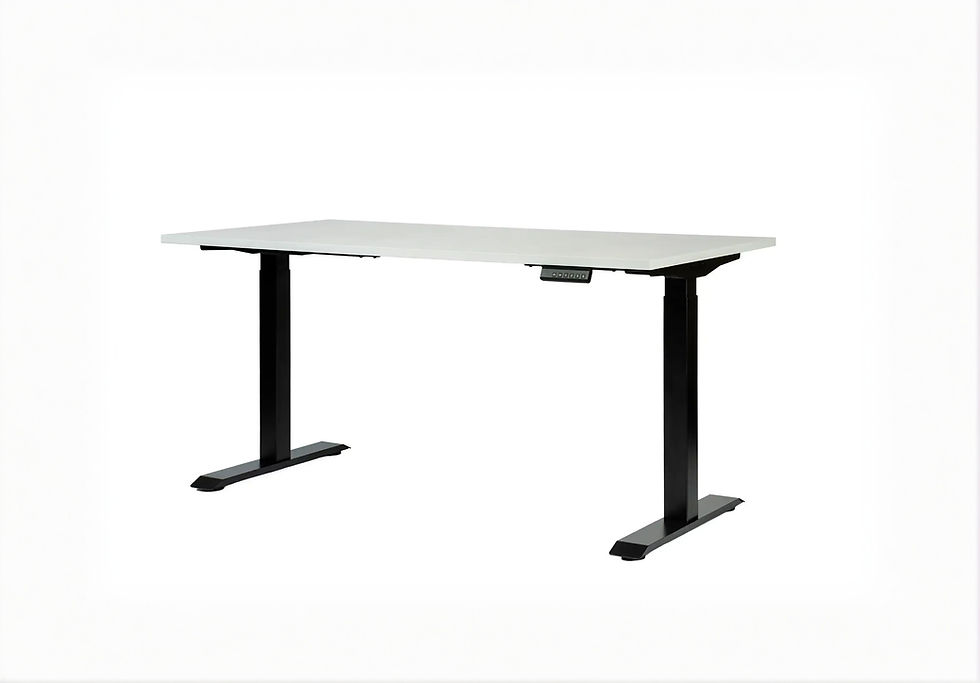
see our guide on best standing desk height for productivity
learn about single vs dual monitor setup for productivity
optimize your environment with our best lighting for deep work guide
Common Mistakes That Increase Workplace Noise
placing desks in high-traffic areas
working in echo-heavy rooms
relying only on headphones instead of improving the environment
using only hard surfaces
ignoring acoustic solutions in shared spaces
Addressing these issues at the source is more effective than adapting to poor conditions.
Workspace Noise Reduction Checklist
Use this checklist to evaluate your workspace:
main noise sources identified
desk positioned away from distractions
soft materials added
echo reduced
acoustic panels or screens used where needed
background noise controlled
If several of these are missing, your workspace may be limiting your focus.
Final Recommendation
Noise control is one of the most underestimated factors in productivity.
For best results, your workspace should combine:
controlled noise levels
proper desk height
correct monitor positioning
balanced lighting
When these elements work together, maintaining focus becomes significantly easier.
If you are optimizing your setup, start with the environment — even small improvements in noise control can have an immediate impact on concentration and comfort.
For deeper solutions beyond basic fixes, see how to soundproof a home office
FAQ: Noise and Productivity
Does noise really reduce productivity?
Yes. Noise increases cognitive load and reduces the ability to focus, especially during complex tasks and long work sessions.
What is the best noise level for working?
Between 30–50 dB is ideal for focused work. This corresponds to a quiet room or calm office environment.
Are acoustic panels worth it?
Yes. Acoustic panels reduce echo and improve sound conditions, especially in rooms with hard surfaces.
Do acoustic screens work in offices?
Yes. Acoustic screens are one of the most effective solutions for reducing noise in open office environments.
Is complete silence best for focus?
Not always. Low, consistent background sound can help mask distractions and support concentration.




















Comments